Showing posts with label historical fiction. Show all posts

Wednesday, March 20, 2013

Review: The Folly of the World by Jesse Bullington

For some reason I still manage to be surprised when the book I’m reading tends to fit in with whatever conversation is currently going on in the SFF-intranets world. The conversation of the moment is all about grimdark, the term that seems to have emerged to describe the ‘gritty’ fantasy that maybe even could be called its own sub-genre (here are a few links to get you started on the discussion). But, I’m not going to quibble about the definition of grimdark, how appropriate it is attach the label to author X or Y’s books, or any of that. But, the book I am here to discuss – The Folly of the World by Jesse Bullington (Indiebound, Book Depository, Amazon) – arguably falls right in with the new kid dressed all in black at the back of the genre party who is buy angrily staring down everyone while (s)he trims his/her fingernails with a large knife.
 
The Folly of the World was wholly unexpected for me – I had heard good things about Bullington’s writing, but really didn’t know anything about it when I started the book (I hadn’t even read the back cover). So, it took me quite a while to figure out how felt about the book – honestly it took until after I finished reading it. The first thing that literally slaps the reader in the face is the very coarse language of the book, particularly in the first half. In the context of the book, it works, though it is above and beyond the coarseness of 99% of the books in fantasy. The dialogue is harsh, ugly and offensive. The descriptions are dark, evocative and unpleasant. And there are graphic descriptions of sex – man on man sex – that is needfully violent rather than sensual and loving.
 
After adjusting to the ruthless writing style I began to wander just where this novel was going. First, it’s not epic fantasy or even second world fantasy. It’s really much more historical fiction, or gothic horror (if gothic horror can apply to a setting in medieval Holland), with only the barest hints of the supernatural. In fact, I have no idea if there really is any supernatural element in the novel – and it doesn’t matter. The hints serve to increase the horror, set the mood, and relentlessly drive home the inevitable and hopeless end – or at least the perception of an inevitable and hopeless end.
 
Throughout this review I’ve used words like ruthless, horror, relentless, hopeless, harsh, coarse, dark, and …grimdark. The world is violent. There is death. There are battles. Horrible things are said and done. One could choose to describe things as tragic, and they wouldn’t be wrong, though I think folly is the better choice as the title itself clearly alludes to. The story shown, the actions and thoughts undertaken are often far too absurd to be anything but folly. The story at its heart is about a bastard seeking his noble birthright. Or perhaps it’s two highwaymen working a con to become noble. Or maybe it’s a rags to riches story. As expected, things don’t go as planned, but one of those cons does become noble, a peasant is lifted to the heights of society, and the fall from the edge is precipitous.
 
The view that Bullington chooses to tell his story through is important. The two conmen I mention above are front and center, though the real story is that of a peasant girl who is literally bought and paid for to help them recover a lost object. These three make up a motley trio representing the worst of the worst in society and genre alike. The two men are homosexual lovers, one is a bastard and the other is severely mentally ill. Both are killers. One will do and say anything to achieve his goals while the other is madly unpredictable. The girl is an uneducated peasant sold into service. She is harsh, violent, and a survivor. Horrible things happen – yet the girl is never raped and remains ‘pure’ through to the very end. It’s all gritty, dark and grim. There are very real conflicts, there is betrayal and death. Characters are wounded and they rise and fall from tragic archetypes to simple folly, though the usual, the obvious, doesn’t happen. There is much that can be said to all this – Bullington’s writing is layered with thematic depth and historical context. And frankly, I didn’t get it (at least not all of it). I typically consider that a good thing as it shows the book has deeper context and meaning than can be easily gained. And for that context, I recommend reading Indrapramit Das’s review over at Strange Horizons, it goes farther and deeper than I could ever hope to.
 
So far this review has meandered, only hinted at plot and character, and gained and lost momentum. In this, it mirrors The Folly of the World. The Folly of the World starts out fast, slows in the middle, only to pick up pace again toward the end. In all honesty, I almost did not finish this book. I kept waiting to see where the book was going, when that twist would occur. One twist occurred, and the second I kept waiting for felt like it never happened. Yes there were events and happens of importance to the story, but not at the level I was expecting (or hoping for?). With less than a hundred pages until the end I put the book down and seriously questioned whether I should bother continuing. I wish I could say that I felt that I had to know the end, but really I only continued because I felt that I had put in a lot of time already and just a bit more to finish it off made sense. I simply didn’t care – the title indicates that it’s the folly of the World, perhaps indicating a story of great significance to the world itself. It’s not. In fact it’s barely even significant in the dusty forgotten historical context it’s presented in. It’s only significant to the actual characters of the book.
 
Upon reflection I think this fits with the book. The book is folly, it’s the folly of humanity. It’s about unexpected love and dedication. It shows that what is important and significant varies greatly by perspective. It’s a book that the reader must love to hate and hate to love. It’s a book that works best when one can’t decide if it should be finished or not. That’s the folly of the book as well as the story within.
 
Did I enjoy The Folly of the World? That’s an answer I’m still searching for, but overall I think I can only say marginally. Do I appreciate The Folly of the World? Yes, Yes, YES. What Bullington does in this book is masterful, especially in the context of the conversation occurring in genre right now around grimdark, what it is and what, if any, value it brings. It’s a harsh truth, it’s a lot of harsh truths, it’s folly, it’s no easy journey to take, and not everyone will finish it. This only increases the ultimate value, if not necessarily its overall appeal.

Monday, December 24, 2012

Review: Of Blood and Honey by Stina Leicht

If asked I wouldn’t consider myself a big fan of urban fantasy. Sure, there are plenty of urban fantasy books that I like, and the last 5 books I’ve read could be considered urban fantasy, but generally speaking I’m not a huge fan of urban fantasy as it’s generally defined at this time. However, I tend to love ‘old-school’ urban fantasy – the stuff Emma Bull, Neil Gaiman, Charles de Lint and others. As often as not, you’ll hear that sort of urban fantasy called mythic fiction or something similar.
 
Of Blood and Honey by Stina Leicht (Indiebound, Book Depository, Amazon) is urban fantasy in the style of old-school urban fantasy that leans toward mythic fiction. It’s also has a strong historic feel to it being set in the early 1970s Northern Ireland. Unlike much of the urban fantasy of today, Of Blood and Honey is not some mixture of up-beat, gritty, humorous ass-kicking protagonist discovering dark supernatural powers with cardboard characters. Of Blood and Honey is a deep, moody, truly dark, melancholy, tragic tale. Characters are constructed with depth, realistically flawed and realistically heroic. There is pain and despair with fleeting hope. This is not a book to lift up, entertain, or escape – at least in the most common thought of context. It is the story of humanity, the cruelty of humanity, love in the face of adversity, the horrors of war and oppressive government and resiliency when most of us would have rolled over and died.
 
Of Blood and Honey takes place at the height of the Troubles in Northern Ireland during the early 1970s. Liam is a young man who gets caught up in things beyond his control and ends up in the IRA. He’s also the son of shape-shifting fey right out of Irish myth, though he doesn’t know it. Throughout the book he’s a son, husband, prisoner, wheel man for the IRA, and drug addict. 
 
Of Blood and Honey is an unusually strong debut. The prose simply excels – at times it’s poetic, at times it captures a feel consistent with contemporary urban fantasy, and it always maintains the tone of Northern Ireland. The time isn’t happy, some truly horrific things happen to Liam and any decent tale of Irish fey must invoke melancholy and tragedy. Throughout Leicht seamlessly weaves the supernatural threads of her tale into the real world of Northern Ireland. 
 
Liam is the perfect character for Leicht’s story. He’s strong – but not strong in the ‘I kick your ass while making witty remarks’ of most urban fantasy. Perhaps strong is not the correct word – resilient fits better. Liam is that typical older teen/young adult looking to step out and find his place in the world – only he has no clue. He has a girlfriend that he thinks he loves, he has a loving mother, but an abusive stepfather. He longs to know who he is, but with his ongoing confusion and frustration comes anger. And there isn’t much that a young Irish Catholic man could do in 1970s Londonderry. He gets caught in the wrong place at the wrong time, he spends time in prison, while unknown to him supernatural forces are making his life harder and the Catholic Church is watching. Betrayal hits him from the closest quarters and everything he thinks he knows is turned inside out. As Liam struggles, it’s the strong arm of government that turns someone with no political aspirations towards the IRA.
 
It’s really a fascinating thing to watch Liam evolve through this book. We literally see him grow up – of course it’s aging through tragedy. At the end I can’t say Liam is left with hope, but it is at least acceptance of a sort.
 
This is a book set in violent, political time that many still alive experienced first-hand. This book focuses on one side of the story – that of repressed Irish Catholics in Northern Ireland. The IRA is shown in a somewhat positive light and in a basic sense, the Loyalists and British Government are bad guys. The horror of the times is well expressed. The violence and loss on both sides is shown. But, this is one side of the issue. Inevitably those who experienced the other side will have issues with this. But, on the whole this book does not glorify any position and shows the horrific, unjust nature of the times, regardless of positions.
 
Of Blood and Honey is powerfully good book – easily one of the best I’ve read in the past several years. It strikes the right balance as a work of urban fantasy, (recent) historical fiction and mythic fiction as it invokes an ‘old-school’ feel while holding on to a contemporary relativity. Liecht shows the horrors of humanity alongside its resiliency in way that we can all relate to in one way or another. The sequel to Of Blood and Honey  and next Book of the Fey and the Fallen is available and from what I’ve heard, just as good – And Blue Skies from Pain (Indiebound, Book Depository, Amazon).

Friday, October 14, 2011

Review: The Edinburgh Dead by Brian Ruckley

The Edinburgh Dead by Brian Ruckley (Book Depository, Powell's Books, Indiebound) is a significant departure from the epic fantasy trilogy that brought Ruckley to the attention of fantasy fans. Set in 1828 Edinburgh, a historic detective tale morphs into something darker and more sinister as Ruckley brings 19th Century Edinburgh alive in his best work to date.

Adam Quire is a war-hardened veteran and an officer for the newly-formed Edinburgh police. A particularly gruesome death doesn’t add up and Quire’s investigation leads him into puzzling and dangerous ground that points to the pillars of Edinburgh society. And then it gets personal and Quire releases the talent he keeps at bay – a talent for survival and extreme violence.

The Edinburgh Dead is the first book by Ruckley that I’ve read since his debut Winterbirth (Book Depository, Powell's Books, Indiebound). I found Winterbirth to be on the mediocre side and haven’t been inspired to finish the trilogy (though I do plan to eventually). In The Edinburgh Dead I immediately noticed that Ruckley’s writing has improved significantly. His descriptions are powerful and set the mood well – early 19th Century Edinburgh comes alive through his words. We see the intellectual powerhouse that Edinburgh has become – we also see the dark underpinnings that props up that distinction. There is privilege and there is everyone else. Lives are hard and dangerous – and there is the ever present need for more bodies to dissect on the cities medical stages.

The Edinburgh Dead is a true blend of many genres into one coherent and very well told story. It’s historic fiction, it’s a hardboiled mystery bordering on noir, it’s gothic horror, and it’s an urban fantasy supernatural thriller. Often when such cross-over happens, one still dominates or the combination doesn’t quite fit as well as it should – with The Edinburgh Dead it’s seamless – a natural blend.

The real strength of The Edinburgh Dead is the setting and the way in which Ruckley draws the reader into the dark and dangerous streets of Old Town. Edinburgh comes to life through the broken, beaten and resourceful Quire, a sinister life beneath the glamour of enlightenment. The relatively slow and steady pace continually builds towards the end – a perfect balance that resists the urge to rush. The only real fault is that Ruckley at time over-indulges with his descriptions, particularly in the latter half of the book where the mood has already been set.

The Edinburgh Dead is told mostly from the point of view of Quire and his personality dominates the book. This both good and bad – Quire is a powerful personality and vividly reflective of Ruckley’s 19th Century Edinburgh, however there are a few minor characters who could have been brought out more. If the book had been told entirely from Quire’s point of view, this flaw would have been less noticeable, but increasingly as the novel moves forward we see bits and pieces from other points of view to fill in the blanks of the evolving mystery.

All in all The Edinburgh Dead was refreshing change of pace from Ruckley and a very good historical gothic mystery horror urban supernatural thriller. I hope that Ruckley continues in this direction with more surprises to come.

Monday, February 23, 2009

Review: Twelve by Jasper Kent

Jasper Kent’s Twelve (US, UK, Canada) combines the tragic history of the Napoleonic Wars in Russia with an Eastern European vampire tale. This approach has been received with much fanfare – dozens of glowing reviews can be found with ease, the book has already had multiple reprints and the buzz seemingly builds by the day. While I add my voice to the chorus, I hope I’m not lost in the buzz, because I think that Twelve is a very special novel – not just as an unique take on historical fiction, not just as brilliant vampire tale in a tired sub-genre, but most notably as a war novel that deserves deeper discussion than I’ve seen elsewhere and that I can provide in a simple review.

Aleksei Ivanovich Danilov is a Captain in the Russian army and member of a covert team of four thinking soldiers at work behind enemy lines to thwart the French invasion through non-traditional means. As it becomes clear that the French march cannot be halted before reaching Moscow, the group reaches out to a mysterious band of twelve mercenaries, colloquially referred to as the Oprichniki. While the reader is well aware from the beginning that the Oprichniki are in fact vampires, we follow Aleksei as he slowly comes to realize that he has enlisted the help of inhuman monsters and then sets a course for their extermination.

In other discussions of Twelve I’ve noticed emphasis on its clever emplacement of historical context and the successful use of Eastern European vampire folklore (which stands in contrast to most of the vampire fiction in circulation these days). Sadly lacking is the realization that this is a also great war novel in the same vein as classics such as For Whom the Bell Tolls, All Quite on the Western Front, and others (even Jasper Kent’s discussions seem to concentrate on the larger historical context rather than the war). Through Aleksei’s largely internal view of conflict, we see the horrors of war, the camaraderie of soldiers, the pain of being separated from one’s family, and the solace found in the arms of another woman.

The Oprichniki play an important part is the war narrative – their role eerily mirrors that of the French. The plague of their ‘invasion’ of Russia can be clearly tracked, their impact on Moscow is in its own way equally horrific, ending in a retreat from a land that ultimately beat them. It’s easy to imagine how the inhuman and horrific nature of vampires could be utilized as a window into the atrocities committed in war (and they are), but the personal war that Aleksei declares on the Oprichniki reinforces the moral complexity of a soldier at war (and even a man being unfaithful to his wife). Kent’s vision of vampires in Russia’s defense of Napoleon’s invasion creates a complex allegory that had me thinking late into the night.

The success of Twelve lies not in the refreshing tale of vampires, the intelligent integration with historical context, or even the allegoric use of vampires in a war novel, but in its central character, Aleksei. Throughout the novel, the reader only sees events through Aleksei’s eyes and memories. While at times we see the horrors of a battle and vampiric atrocities, it is the internal wanderings of Aleksei that dominate. We follow his journeys through rural Russia, through Moscow, into a brothel and his emerging love for a whore, through the love and betrayal of his comrades, longing for his family, and into battles with faceless enemies and supernatural creatures. This Russian everyman is the wonderfully realized guide through it all and the success of Twelve rests firmly on his shoulders alone.

Whether your are looking for a beautifully told historical novel, a cunning vampire tale, or a stark war novel, Twelve will satisfy. Kent embraces both genre and history, resulting in a book that defies classification and spans multiple boundaries. Early success has already lead to the expectation of more to come – the Danilov Quintet will span important events throughout 19th and early 20th Century Russia, with Thirteen Years Later coming soon. After Twelve, I can’t wait to see what Kent throws at us next. 9/10

Monday, December 03, 2007

Review: Mythago Wood by Robert Holdstock

World Fantasy Award (1985) winning Mythago Wood by Robert Holdstock represents a departure from the traditional epic fantasy of its day with elements of science fiction and historical fiction while imbuing an atmosphere all its own. Defying easy categorization, it explores the mythos of humanity in a setting eerily recognizable and reminiscent of something more primal in origin.

Steve Huxley returns from the Second World War to his home in rural England, located at the edge of an untouched, wild wood that has long fascinated his family. His father, a source of familial strife due to his obsession with the wood, has died while Steve was away at war. Christian, Steve’s older brother, has since explored his father’s research into the wood and become more like his father than Steve could have imagined.

The Rhyope Wood is the source of a mysterious energy that creates people and creatures out of the myths of humankind (called mythagos) – particularly myths of British soil like Robin Hood, King Arthur and others long lost from modern memory. Through the proximity of the family home to the Rhyope, the wood’s influence brings obsession, love, pain and death, and ultimately inspires a journey into its ancient, haunted heart where the mythagos have myths of their own.

From the start of Mythago Wood Holdstock reaches into the primal heart of the reader, drawing them into his imagined ghost wood filled with myths remembered and not. The wood itself becomes a dominating character bringing about the realization of just how powerful of a force primeval forests were in ancient times. As someone who traces the majority of their ancestry to that part of the world, there is a sense of this coming being of my past – these mythagos are my own.

Having inspired such a deep connection remarkably early in the book, Holdstock proceeds to tell an inspired tale – a modern myth all its own. Solitary Steve reflects often and subtly on the familial rivalry dominating his past and present while he is seemingly destined to love one of the forest’s mythagos, as did his father and brother before him. The resulting modern sibling rivalry follows the path of myth, as ancient as the myth they both pursue.

Much can be taken from the many of the aspects of Mythago Wood – in some ways it reads as a series of myths, tales, and parables framed by more myths, tales, and parables. Questions are presented, rather than asked and reflected upon more than answered. Contemplation is the result – hopefully lacking the compulsive quality of the book’s characters.

The haunting beauty of Mythago Wood is wonderfully realized as it penetrates to primeval heart of the Britain. The World Fantasy Award it won is well deserved and this timeless tale is as relevant today as it was 20 years ago. 8/10

Monday, July 16, 2007

Review: Set the Seas on Fire by Chris Roberson


Set the Seas on Fire by Chris Roberson harkens back to an age of exploration and wonder, where one could realistically dream of travel through a world unknown. Set during and just following the Napoleonic Wars, Roberson offers a historical fiction adventure that serves as a prequel to Paragaea: A Planetary Romance, while offering a worthwhile adventure all its own.

Lieutenant Hieronymus Bonaventure serves as second in command on the HMS Fortitude in the days of dominance of the British Empire. As the Fortitude sails the tropical Pacific, it encounters a Spanish Galleon, and the somewhat inept captain is determined to capture its cargo. During the battle, a formidable storm sweeps both ships off course and into uncharted waters. With limited supplies, the crippled Fortitude must seek out the unknown in order to survive – leading to the discovery of a paradise, and the darkness nearby.

The narrative is really a pretty simple tale of nineteenth-century adventure: naval battle, undiscovered island, first contact with natives living in paradise, exotic women, leave-takings, unnecessary battle against dark and unknown forces, pyrrhic victory and survival for some. This blunt breakdown of the story is not intended imply that it’s an uninteresting one, or that it’s not worth reading – it’s well told and gains strength as it progresses – but, it is just the frame. The filling is the afore-mentioned and aptly-named Hieronymus, deridingly known as Hero by a sarcastic midshipman.

Roberson shows the making of a special kind of person, a leader of men, a lover, an adventurer, a nineteenth-century Odysseus and the first half of his Odyssey. Through flashbacks we periodically visit the childhood and early manhood of Hieronymus, son of a scholar, dreaming of adventure, seeking and receiving the tutelage of an accomplished swordsman, who has lived his own life of adventure. Young Hieronymus contrasts with his older self, Lt. Bonaventure, having experienced some of that adventure in the service of duty for King and Country, yet somehow managing to not live life in the spirit of adventure he craved as a child. His excitement and education at the discovery of an island and its people are tempered as the implications are fully realized. He learns of love, cultural shock, and consequences – he glimpses his future from a shaman and doesn’t have the courage to stop the mistake he knows his captain will make.

Set the Seas on Fire is a fun and satisfying adventure through the South Seas. Most correctly shelved as historical fiction, fantastical elements are almost an afterthought where native myth comes alive, meeting the captain’s folly. While succeeding overall, a few minor issues gave me a bit of grief. In an effort at setting a nostalgic feel, Roberson uses the seeming old-fashioned language of the nineteenth century which I found difficult to get into at first, although, by mid-way through the book I didn’t notice it anymore. Some awkward pacing occurs do to the use of flashbacks as things slow down significantly. This is entirely intentional and appears to be an effort to take a step back, breath deeply and get to know Hieronymus a bit better before moving on. The success is a bit mixed, but aids to a building of anticipation and the desire to know what will come next.

As I’ve said above, Set the Seas on Fire is a highly enjoyable novel, good story, and great view of an interesting character. But, through it all, I’m left with the sense of missing something important. And that is precisely the case because while it stands well on its own, Set the Seas on Fire is a prequel, and it appears that the meat of the story, the second (and more interesting) half of the Odyssey, occurs in Paragaea, which I haven’t had the opportunity to read. So, while I can recommend Set the Seas on Fire as a fun nineteenth-century adventure, I think that it just might need Paragaea to truly complete it. 6.5-7/10

Saturday, December 30, 2006

Review: The Anubis Gates by Tim Powers


The Anubis Gates by Tim Powers defies typical sub-genre classification – part science fiction, part urban fantasy, part time travel story, part historical fiction, part thriller, part noir, and part secret history – yet it is not the sum of these parts, but something excitingly different. Since its release in 1983 it has deservedly become a ‘new classic’.

A small group of ancient Egyptian sorcerers in the early 19th century initiate a plan to end English domination of Egypt and reestablish it as a world power of its own right and religion, without the pollution of such up-start religions as Christianity and Islam. Magic has faded in the world and become perilous to use – a powerful spell intended to bring ancient Egyptian Gods back into direct interaction with the world fails, dramatically altering an attending sorcerer and blasting holes in the space-time continuum over a period of several hundred years.

A rich, powerful and eccentric old man in the 1980s seeks a way to conquer terminal cancer and discovers these gaps in time and how to use them for time travel. He seeks the help of an expert in early 19th century poetry to lead a group of high-paying, time traveling tourists to observe a lecture – the hapless Brendan Doyle. As expected, plans are more than they seem and they don’t last, leaving Doyle stranded and in grave danger.

The Anubis Gates is a plot-driven novel that keeps you wanting more once the story gets moving. While the plot is action packed and full of plenty of twists and turns, the lack of great characterization eventually catches up. One can’t help but cheer for Doyle, but his continued idiocy left me cold and questioning his character. Other characters are merely present, lacking the depth they beg for.

However, whatever The Anubis Gates lacks in character development, it makes up for with the sheer genius of the story. I might not be singing its praises as loudly as some, but I do recommend it to readers well beyond the traditional boundaries of SFF, as well as those of us within. On my 10-point scale, The Anubis Gates scores 7.5.

Tuesday, September 19, 2006


Sarum by Edward Rutherfurd

I finally finished the beast of a book!

Sarum doesn’t really fit with the typical books I review around here – it fits firmly in the historical fiction realm in the mold of a James Michener book. So, this review will be a bit shorter than I typically write (not that most particularly long).

Sarum is the story of the region around Salisbury in southern England – we begin with its initial settlement in the Stone Age. Following the decedents of the original settlers and newcomers through time in a series of short stories, we see the coming of the Bronze Age, the Celts, the Romans, the Saxons, and the Normans. We have stories set during important events throughout English history including the War of the Roses, the beginning of the Anglican Church, the black plague, wars with the French and the Spanish, the Napoleonic Wars, and more. It is a great way to tell the history of England through the eyes of one of its oldest settlements – Sarum.

This book plagued me with the same issues I’ve encountered with Michener – it was hard to get through. Not because it was badly written or uninteresting, but because it was long. I found when I got to about the half-way point (somewhere in the 1400's) I had to break it up by reading other books in between stories. I wish some areas had been covered more (the early history of the Picts and Celts – especially in terms of religion), but that would make a long book even longer.

If you’re a fan of Michener-style historical fiction, this is a good book for you, and it’s a great way to pick up some history for someone like me who has had little in the way of European history. Anyway, on my 10-point scale I give Sarum a 6.5 – it’s good, but I had to set it aside from time to time.

Thursday, February 09, 2006


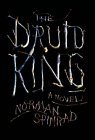
The Druid King by Norman Spinrad

The Druid King by Norman Spinrad is an interesting book to classify. It appears that it was originally marketed as historical fiction, yet I found it in the sci-fi/fantasy section at Half Priced Books. In the end, I would put it at about 90% historical fiction with 10% fantasy thrown into the mix.

The book is the story of Vercingetorix, the charismatic leader of the Gauls during the time of Julius Caesar’s conquest of Gaul, and a national hero of France to this day. Vercingetorix is the son of Kelltil, the leader of one of the larger Gallic tribes, coming to manhood in a time of increasing Roman influence in the lands of the Gaul. The death of his father sends Vercingetorix fleeing into the forest and into the tutelage of the Druids. Guided by the Arch Druid and inspired by visions of the ending of an age, Vercingetorix becomes both a man of action and a man of knowledge.

An early alliance with Caesar ends and Vercingetorix sets out to unite the tribes of Gaul and rid the land of everything Roman. The rest is the story of two military geniuses clashing and a struggle against inevitability. The book ends with an epic battle that military historians still study today, in a remarkable sequence of battle and vision.

I picked this book off the shelf because it looked interesting, and it was both interesting and very informative. However, this book fails to be the book it could be. One of the most intriguing aspects of Vercingetorix is his education as a Druid, yet relatively little of the Druid tradition is explained satisfactorily. The language of the story ranges from too dry to too flowery, and the book is easily put aside. But, the interplay of the two great leaders is well done and their charisma does infect the reader. The book ends with a bang that improved my opinion of it dramatically.

The Druid King is a book I will recommend, but with conditions. Those interested in military, Roman, or Gallic history are encouraged to pick this book up, realizing that it is not the best written historical fiction available. Anyone who wants a story of a tragic hero up against incredible odds fighting the most powerful military force in the world, a story that happened for real in this world 2000 years ago, should also consider The Druid King, with the above reservations in mind. On my rating scale of 1-10, where 5 is a take-it-or-leave-it book, 10 is unsurpassed, and anything below 5 is typically not recommended, The Druid King scores a 5 – 5.5, with the extra 0.5 due the last 40 pages.

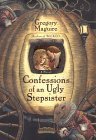
Confessions of an Ugly Stepsister by Gregory Maguire

Confessions of an Ugly Stepsister by Gregory Maguire is a retelling of the Cinderella fairy tale that most of us know decently well from the author that has retold other well known stories such as Snow White (Mirror Mirror) and The Wizard of Oz (Wicked: The Life and Times of the Wicked Witch of the West). This is the story of what could have actually happened to inspire the fairy tale we’ve come to know.

The story begins with a mother and her two young daughters arriving in Holland in the 17th century. The family is fleeing tragic events in England and has no financial prospects with a lack of men and sons. A kind painter takes in the family in exchange for housekeeping duties and the use of one of the daughters as a model. A commission to paint the daughter of a local tulip merchant inspires the painter to produce his greatest work ever, and provides the opportunity for our family to move up and become servants for the wealthy merchant family.

Tragedy strikes the merchant family with the death of the wife, which sets the stage for our mother to marry the wealthy merchant. Alas, there is now a stepmother, two step daughters, and beautiful Clara – the subject of our painter’s masterpiece. A royal visit comes, and there is indeed a ball with a missing slipper and all. The pieces are all there, if not in quite the way expected.

Confessions of an Ugly Stepsister is much more than a retold fairy tale; it is a literary tale of the meaning of beauty, of misfortune, ambition, deception, abuse and even love. The writing is easy to read and fast paced for a book without much action. While you’ll probably find the book shelved in the sci-fi/fantasy section, the tale is grounded in reality and truly contains no fantastical elements beyond metaphor.

If you want magical beasts, epic battles, and masculine heroes, this book is not the book you are looking for. If you are looking for a tale that is relatively true to its historical place about the coming of age of young women, the ambition of elders, of beauty and love; this is the book for you. I’ve also read and enjoyed Wicked: The Life and Times of the Wicked Witch of the West by Maguire and found this book to be similar, if more subtle. I enjoyed Wicked more, but found the quality of writing and flow of the narrative to be better done in Confessions of an Ugly Stepsister.

On my rating scale of 1 to 10, where 10 is unsurpassed, 5 is a take-it or leave-it book, and less than 5 would not generally be recommended, Confessions of an Ugly Stepsister scores a 6.5. The book is an enjoyable read, with a lot to say beyond the retelling of a fairy tale, but in the end, it is a subject matter that I can’t claim to be overly attracted to. However, the book is well done enough to earn a recommendation.

LinkWithin

Related Posts Plugin for WordPress, Blogger...