Friday, July 21, 2006

What Day Is It Again?

Still fighting a bit of the jet lag, but hopefully I’m getting past that. The real kicker in Frankfurt is the heat – air conditioning people! I live in Arizona, and it’s very hot there – this time of hear highs around 110 or more. But when it’s that hot, you just don’t go outside much, you stay in and enjoy the air conditioning.

In Frankfurt, highs are in the mid to upper 90s. Yes, cooler than Phoenix, but it’s more humid and air conditioning is sparse. Yep, my company’s office has no AC, my hotel room – no AC. It cools down nicely at night, but the sun doesn’t go down until almost 10pm – it makes it tough for someone going to bed early to fight jet-lag to actually sleep in a west-facing room with no AC and no fan. So, I’m a bit cranky due to the lack of AC. I look forward to heading to Czechia where it should be a bit cooler, though I imagine there won’t be AC there either.

Goal for the day: Don’t get on the wrong train when going back to the hotel!

I started The Name of the Rose on the plane. I’m enjoying so far, but it is not going to be a fast read. It’ll probably be a week or more before I get another review up. So, please don’t abandon me :) - keep coming back for the nice travel experiences of this typical spoiled American traveling and working in Europe. And by typical I’m referring to my wonderful language skills of English – no other languages for me (my mostly forgotten, broken Spanish doesn’t get me far in Germany).

Tuesday, July 18, 2006

Neth International

Well, a big opportunity has come at work and it looks like I’ll be traveling for a while. I’m flying to Frankfurt, Germany tomorrow and will head down to the Czech Republic for field portion of the project. What this means is that I will have sporadic access to the internet and be quite busy besides, so updates may not happen until I’m back, which will be sometime around August 12th.

I’m currently reading Sarum, which is a large hardback, but I don’t want to travel with such a beast of a book. I’ll bring several books and may even have time to write up a review as I finish, we’ll see – no promises. I plan to take His Majesty’s Dragon by Naomi Novik, The Name of the Rose by Umberto Eco and whatever else from The Stack that looks good.

I’ll be in rural Czech – I’ve been to Prague before and will probably avoid it since it’s so crowded this time of year. Any suggestions of places to visit in my spare time for either Czech or the Frankfurt area are appreciated.

Friday, July 14, 2006

Another Robert Jordan Update


RJ has posted to his blog another update in his fight with amyloidosis. The chemotherapy doesn’t seem to have worked, but at least things aren’t advancing at the moment. His entering into a test program, so there is still hope on the medical science front, but chances are fading as are probable life spans.

But, he still has a great attitude towards things, better than I would.

Wednesday, July 12, 2006

I Hope No One I Actually Know is Reading
The whole blogging process is at once interesting, fun, liberating, uninhibiting, self conscious, embarrassing, a waste of precious time, a good distraction, informative, and loads of other descriptors that I could come up with. But what does all this say about what I really think of SF, or fear that others think?

As I gain more popularity and visibility, I’ve struggled with some internal thoughts – what happens if someone I actually know is reading (not of my ‘internet friends’ or frints as I think of them), or shudder-the-thought of my wife or other family member visiting. Is this another example of hiding the cover of the book I’m reading, or leaving the jacket behind? Am I that embarrassed that I’m a blogger, and not just a blogger, but a one who blogs about SF books?

What about you guys out there in the blogosphere? I doubt many of you who are ‘doing your job’ struggle much with this, but how about those like me who do this as more of a hobby? Do your friends and family know of your blogging. Are frints distinguished from real-life friends? Am I just dating myself as someone who missed the cyber-train by a few years?

I know that I crave the anonymity of it all – I don’t want real world people to know this side of my personality. So, I’ll keep going as I do, in the dark corners of home and office, anonymously blogging away about my precious genre books.

Friday, July 07, 2006

The Once and Future King by T.H. White

The tale of Arthur, Merlyn, Lancelot, Guenever, and the round table is immortal and The Once and Future King by T.H. White, first published in 1958, is arguably the most respected modern version of these events and a widely acknowledged classic of fantasy. White loosely bases his retelling of this famous legend from the text of Le Morte D'arthur by Sir Thomas Malory, dating to the 15th century. He tells the tale in four parts: The Sword in the Stone, The Queen of Air and Darkness, The Ill-Made Knight, and The Candle in the Wind, with a fifth part published separately as The Book of Merlyn.

The Sword in the Stone covers the life of Arthur as a child, when Merlyn comes to him as his teacher and provides inspiration for the Disney movie of the same name. Arthur has no knowledge of his birthright and believes he is destined to be merely a page to his bully-ish foster brother Kay. The Wart, as Arthur is known, has many adventures, including conversations with beasts and outlaws, and an encounter with a sword stuck in a stone.

The Queen of Air and Darkness focuses on the childhood of the Orkney faction, the sons of King Lot and Queen Morgause. We see their troubled childhood and anticipate the trouble it will cause.

The Ill-Made Knight is the tale of the greatest knight in the world – Sir Lancelot Dulac. Lancelot is not the dreamy hero anticipated, but a troubled man of conflicted emotions and loyalty. We see the blossoming love with Guenever, the quest for the Holy Grail, and the trappings of Elaine.

The Candle in the Wind concludes The Once and Future King with the story of Arthur’s downfall, the love quadrangle of Arthur, Lancelot, Guenever, and God, and the tragedy of Mordred, Arthur’s illegitimate son of Queen Morgause.

The voice of The Once and Future King sets it apart from the usual re-telling of the myth of Arthur and his round table. White takes a conversational tone at times, jumping in and out of the time and point of view of his subject with commentary on Malory’s original telling. This tone is both a curse and blessing on the tale, sometimes annoying, sometimes amusing.

One suffering of White’s telling is the lack of that extra something that makes the reader truly care for the characters. This is a tragic tale, yet I never felt sorry for the characters, I never connected with them as I should have. Perhaps it’s due to the conversational voice I mention above, but whatever its origin, the story never overcomes this.

The Candle in the Wind sets itself apart from the rest of book as the best written installment. White finally manages to get me to care about the characters, and it ends well. The tone become much more serious and reflections of ‘modern’ times shine through as Europe repairs from WWII and the Cold War takes over.

The Once and Future King is a classic of fantasy (it says it right on the cover), one of the best known versions of the story of King Arthur, and therefore, a must read in the pantheon of Arthur, but not a book without flaws. On my 10-point rating scale, The Once and Future King rates a 6, not as high as anticipated, but still a decent read.

Monday, July 03, 2006

I Wish I Said That

Sometimes, you close a book with the distinct feeling that you'll only truly get it if you read it again, preferably right away. Of course you don't, since there are twenty other books waiting. So, you tell yourself, you'll save it for a time when you'll be able to truly appreciate it.

Some time later, you're about to write a review, and you still didn't get the time for a second reading. And you know that, while there are a thousand things you want to say about this book, you'll probably miss the most important one, since you don't know it yet.
-
Jakob Schmidt, a review at SF Site

I won’t pretend that I’m a particularly talented reviewer, so generally when someone says something better than I do (a rather common occurrence), I just move right on. But the above quote hit me – this is appropriate so often that I wish I’d said it first; it can be said of many of the best books that I’ve read.

The two books that I’ve read lately that jumped into my mind are
Kafka on the Shore and to a slightly lesser extent, City of Saints and Madmen. What comes to mind when you read it?

On a related note, this is yet another reason why I simply must read
Vellum soon.
Erikson and Esslemont Release Dates!
Good news about release dates from Transworld via Pat over at Pat's Fantasy Hotlist.

At the moment we’re due to publish NIGHT OF KNIVES and RETURN OF THE CRIMSON GUARD in May 2007 following the publication of Steven Erikson’s REAPER’S GALE (Malazan Book of the Fallen 7) in March.

I can hardly wait.

On my own reading progress - well it's been busy. I should finish up The Once and Future King later this week. I haven't decided what to read next, but it will probably be something set in the UK. In the fall I'm traveling to England/Scotland/Wales and in preparation of that trip, I'm reading a bunch of books set over there - mostly with a SF slant.

Tuesday, June 27, 2006

What the Color!
I decided I would try a new color for the blog since I've heard that the white text on a black background was a bit hard on the eyes. Anyway, let me know what you think of the changes, feedback is appreciated.

Monday, June 26, 2006

Reviews, Bribes and Misconceptions

I saw this post over at the Emerald City Blog and got a bit pissed off even though it doesn’t really apply to me. It all begins with this passage from a review over at Strange Horizons:
Just like everyone else, I am rather suspicious of hype. As soon as I hear something is the best new thing ever I start to wonder what's wrong with it. Sometimes, as in the case of Jonathan Strange and Mr Norrell, the praise seems warranted. Far more often I want to know how the reviewer was bribed to tell me such lies. Which brings me to The Lies of Locke Lamora, a book awash in buildup. There's a movie deal and already a fair number of foreign rights deals, and the buzz surrounding it seems determined to convince us that it will be a best-selling novel.

Now, on the surface this just seems to be an attempt to be clever in saying that hype is troublesome – not a stance I disagree with. However the bit in the middle about reviewers being bribed and telling lies is the real kicker. First, the implication is that reviewers are unethical and profiting significantly from the reviews they write; then it says that if the opinion of a reviewer differs from their own, it must be a lie (insinuating that there are clear right and wrong opinions about books). Wow, need more be said about how unfortunate and ridiculous this is?

Of course there are probably a few exceptions where these very things are happening. But to be so broad in implicating pretty much every on-line reviewer is disgusting.
I couldn't help but relate this answer in an interview that Scott Bakker gave:
I think the temptation to write for your reviewers is a peril that every author faces. Since reviewers are not typical readers, succumbing to this temptation means writing for people with very specialized expectations. I actually think this is a very profound cultural disease, one which has lead to the degradation of spectacle as a literary category, and thus to the effective segregation of thoughtfulness and mass appeal. Here in North America at least, literary culture trains those with the desire to challenge readers to talk amongst themselves - or in other words, to write for people who have the least to gain from being challenged. They pilfer all the talent, then call popular culture dreck. Then, rather than acknowledge their own institutional role, they blame it all on the evil corporations, even though the human fascination for spectacle predates General Electric by the length of recorded history. After all, something must be preventing the masses from coming to them and to their status-preserving preference for the mundane.

There seems to be a bit of this attitude evident in the statments above.

Now, there is this blog talking about all the money being made when reviewers link/promote books they review with links to Amazon. You may have noticed that the books here at this blog have these links. I have a rather small audience around here and I’m certainly not a well-known reviewer or critic that’s receiving ARC’s and the like (though, I’d like it if I did – hint). So, while I’m not exactly the target of these types of statements, it still grazes me enough to be insulting.

For those curious about the rewards I’m bringing in from all those Amazon links, I’ve had a total of 12 books purchased through those links, of which I bought 11. This works out to just about $11, keeping in mind that most of that money was my own anyway. While I’m sure that other, more popular and respected reviewers out there make more money than this, I’m also confident that they are not exactly breaking the bank on this. In fact, I’d bet that the vast majority don’t even come close to breaking even if you consider how much time and effort they put into create the links and such in the first place.

So, if you think that someone like me is profiting with this blog, keep taking those drugs and consider marketing them to others. If you like a book and plan on buying it, consider clicking on link from here – I just might get enough money out of it to afford half a book this year.

So, now I will quietly wait for my bribe money.

EDIT: The author of the review I mention from Strange Horizons has responded to her word choice here.

EDIT: More and more reactions. And some more.

Tuesday, June 20, 2006


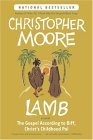
Lamb: The Gospel According to Biff, Christ’s Childhood Pal by Christopher Moore

Well, the title to this one just about says it all. Christopher Moore is known for his humorous, satirical and off-kilter writing – Lamb, is certainly no exception. It seems that the Bible forgot to mention Christ’s best friend – well, Moore provides us with his story, as only a very funny person can.

The story begins with an angel that can only be described as a bit incompetent. This angel receives instructions to resurrect Biff so that a new Gospel can be written. Our angel is not happy with his assignment, referring to Biff in less than flattering profanity.

Who is this Biff – certainly not someone mentioned in the Gospels as we know them? Biff is Jesus’ best friend from childhood (Jesus is referred to as Josh rather than the Greek version of the name we know so well). How could Josh go through life without ever lying, steeling, sinning, etc – well, his best friend did all these things for him.

Biff relates all the humorous, blasphemous and even mundane events of Josh’s growing up and seeking to achieve his destiny. We are finally told about what he did during those teenage and young adult years (remember most of the Gospels start with Jesus at the ripe old age of 30). The pair sets off for the Far East to track down the three wise men, in this time they receive teaching from many ancient philosophies (such as Buddhism and Taoism) and learn such things as kung fu, jew-do, yoga, alchemy, sarcasm, and how to keep camels regular.

Clearly this is a subject that many consider sacred and controversial; and Moore negotiates a very fine line quite well. The story is humorous, remarkably true to the Gospels, and not offensive (at least in my opinion). In fact, I’d even go as far to say that through all the crass and even silly aspects, the end result is an insightful construction of the possible origins of Jesus’ teachings. One my greatest surprises is that Moore clearly did his homework while writing this one – it’s not just a collection humorous anecdotes and fart jokes.

Moore is not the greatest writer out there, but neither is he a bad writer, and he is certainly a writer that I find quite humorous. He has no fear to tackle controversial and potentially offensive subjects, yet does so with a light heart and an ironic mirror. On my 10-point rating scale (describe here), Lamb: The Gospel According to Biff, Christ’s Childhood Pal rates a solid 7. This is the first book written by Moore that I’ve read, but it won’t be the last.

Related Posts: Christopher Moore Book Signing

Monday, June 19, 2006


Eschatology, Knowledge and The Wheel of Time

Robert Jordan’s The Wheel of Time is one of the most popular epic fantasy series of all time. Just as many people love it as hate it, I’m not going to defend or praise the series in this post, but I will say that I am a fan.

Anyway, I wanted to link up to a couple of essays that have been written about The Wheel of Time and some the thematic elements within. They are really quite fascinating reads. There are No Beginnings or Endings… The Paradox of WoT's Eschatology and The Price and Prize of Knowledge are both found over at wotmania and are authored by linda_sedai and DomA, respectively.

Wednesday, June 14, 2006

Review: Kafka on the Shore by Haruki Murakami

Sometimes a novel moves through and beyond such trite descriptions as gripping narrative, talented writing, and beautiful prose. Sometimes a novel becomes important. Kafka on the Shore, while encompassing any number of canned descriptions such as those above, is important. I feel that I could read this novel a dozen times and come away with a different understanding each time.

Kafka on the Shore tells the story of 15-year old Kafka Tamura as he runs away from his home in Tokyo and a cold, distant father. Kafka is that silent brooding guy in the back of the class who never says anything, never smiles, and has no friends. He is mature beyond his 15 years, intelligent, conflicted, yet naïve as the typical adolescent male.

Kafka travels to the southerly city of Takamatsu where he searches for something – perhaps the mother who abandoned him at a young age, perhaps the sister lost to him with the mother, perhaps a way out of the world. He discovers a private library and its eccentric staff (or maybe the library discovers him); they take him in.

Mr. Nakata suffered mysterious and terrible accident as a child during World War II. He is now a harmless old man who enjoys conversations cats and predicts unexplainable events – such as fish falling from a cloudless sky. A meeting with a strange entity in the guise of Johnny Walker sets him on a journey to set things right in the world and its relation to other worlds.

For those that love labels, magical realism generally describes the atmosphere created by Murakami. For readers like myself who have limited exposure ‘non-Western’ literature, Kafka on the Shore is a great gateway to the East. This Japanese story cuts across cultures and reminds that humanity has more in common than we often realize.

Kafka on the Shore will speak to different people in different ways, and I’m still working out what was ‘said’ to me. It is a beautiful and meaningful novel that I certainly recommend. On my 10-point rating scale (described here), Kafka on the Shore rates a solid 8.

Wednesday, June 07, 2006

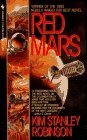
Red Mars by Kim Stanley Robinson

I’m a geologist by training who loves to read, but rarely does my scientific training add much to books I read for fun (it’s much more likely to take away from a book due to the clear misunderstanding of science of many authors I’ve read). The books by Kim Stanley Robinson are an exception, and in my opinion are exceptional pieces of scientific fiction. The science in his books tends to be very accurate, realistic, and well described in a fashion that even the scientific illiterate can appreciate. How can I best express how Red Mars fits? My wife is a planetary geologist with a PhD dissertation about the physical properties of the surface of Mars – many of my closest friends are also planetary scientists with expertise on Mars. Red Mars is the most often talked about piece of fiction about that planet among those circles.

I suppose that you can gather from my statements above that I had high expectations about this book – I was not disappointed. Red Mars is the story of the colonization of Mars by humans. The book captures the essence of the true hostility and isolation of this environment in incredible ways and truly expresses the affects on the first humans on Mars. Mars changes everything, yet human nature prevails with all its tragic results.

This is one of those books that has the chance to be prophetic – the US has an initiative to get humans to Mars and a colony on the Moon. With the current trends of the world, the scenario presented in Red Mars is remarkably close to what might happen. I wish and hope that this isn’t how things go.

Red Mars begins in a new settlement on Mars where one of the first hundred colonists gives a speech and then manipulates newer colonists to assassinate one his fellow first hundred. This point of view shows us just that – one point of view.

Next we jump back in time to the initiation of the trip to Mars. We learn of the selection processes and see the group psychology develop on long, confined journey from Earth to Mars. We slowly step through time and point of views as our colonists journey, land, build, are joined by new colonists, argue, debate, love, and die. Human nature is bitterly exposed as we see a clash of cultures, religions, scientific opinion, government, and corporations. This is the tale of the beginning of humans on Mars, the sequels Green Mars and Blue Mars complete the history, and I’m curious to see just how Robinson does this.

As this review shows, Red Mars is more than a story about the colonization of Mars. I could not help but become very introspective while reading and certainly at the conclusion of the novel. I won’t say that the characters are in the ‘gray area’ of neither good nor bad; the more correct statement would be that they are real people. They have passionate beliefs, strong motivation, ambition, emotional problems, and high levels of intelligence. They seem truly real, not characters in a novel – a rare distinction.

On my 10-point rating scale (described here), Red Mars rates an 8.5. This is a book I thoroughly enjoyed and strongly recommend.

Monday, June 05, 2006


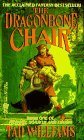
The Dragonbone Chair by Tad Williams
Are you looking for a pure fantasy novel/series – adventure, magic, strange creatures, escapism? Are you not interested in (or need a break from) the ‘new weird’, magical realism, post-modern works of SF literature filled with weighty themes and ideas? The Dragonbone Chair by Tad Williams might be exactly what you’re looking for.

The Dragonbone Chair is standard fantasy, full of just about all of the clichés. We have an adolescent male of mysterious (and probably ‘special’) origins, guided by a wise old ‘wizard’, who is thrown into harrowing circumstances beyond his control and understanding. We have the death of a loved monarch, the replacement with a lesser leader, and the advice of an evil sorcerer. There is a greater ‘dark lord’ of sorts, and we have elves, trolls, giants, and other fantastical creatures. Yes, the parallels to Tolkien and other fantasy authors are real, but the story is well done and all its own, even if not terribly original in its basic premise.

The above description can be taken as bad or good depending on your point of view. Many people are looking for exactly what Tad Williams offers us with The Dragonbone Chair, which is the first installment of the Memory, Sorrow, and Thorn trilogy. This is an adventure story – a tale of magic, journey, coming of age, love, hate, and the fate of a world – or another way to look at it, this is the kind of story that made you fall in love with fantasy in the first place. Yes, this tale could be considered ‘young adult’ (though it’ll be shelved in the SF section at bookstore), but it can easily be enjoyed at more advanced ages.

The Dragonbone Chair is the story of Simon, and orphan scullion-boy working in the castle serving as the center of the Osten Ard kingdom. Simon is apprenticed to the castle’s doctor Morgenes in a time when the old king John dies and is succeeded by his son, Elias. Elias brings along his dark advisor, Pyrates, who has forged an alliance with a greater evil. The land is in turmoil and Simon forced into a journey with great implications in the greater conflict. The end brings little conclusion, as journey continues in The Stone of Farewell and concluded in To the Green Angel Tower, which was divided into parts 1 and 2 for the paperback.

One advantage of the Memory, Sorrow, and Thorn trilogy is that it is finished and has been for some time. So those of us tired of having more and more unfinished series on our reading stacks don’t need to fear yet another addition. Another advantage is the wide-range of audience this book is appropriate for – children through adults can enjoy alike (though the books are quite lengthy for younger readers).

Tad Williams has a reputation for slow starts, and after reading The Dragonbone Chair, I have to agree. The beginning is slow-paced and could easily have been tightened significantly. This will be a hurdle for some readers, though the pace picks up significantly later and becomes the adventure anticipated. The writing is a standard fair, with a few mixed-metaphors and marginal characterization – the main characters are decently well-done, with supporting characters less-so. As with many fantasies of this type, strong female characters are a bit lacking.

Caveats aside, I enjoyed The Dragonbone Chair and look forward to continuing the story to its conclusion. While the story is ‘standard’, it is entertaining and just fun to read. On my 10-point rating scale (described in detail here), The Dragonbone Chair rates a 6.5-7. Fans of standard, epic, sword and sorcery style fantasy will love this book and it’s a great introduction to genre for teens, but readers looking for ‘more’ out of their books and something new will probably prefer to pass it by.
Ahh....That Was Nice!

Well I'm back from the vacation in Maui. It was a wonderfully relaxing trip, needed time off from work, and welcome relief from the scorching summer heat here in Arizona (today's high will be about 110° - 43 C). Now I’ve got quite a work load piled up at work, so I’ll be busy for a while.

I didn’t get quite as much reading done as anticipated, but I did finish The Dragonbone Chair and will try to get a review up shortly. I’ve only got 100 pages left in Red Mars, so I should get a review up for that in the next day or two.

LinkWithin

Related Posts Plugin for WordPress, Blogger...