Wednesday, July 30, 2008

Orson Scott Card - Terrorist?

Orson Scott Card has a history of writing pretty hateful things - here is the latest example, where he literaly calls for an overthrow of the government of the US if gay marriage is legalized (does this make him a terrorist?).

This blog post at SF Diplomat points out the long history of Card's hateful speak, and points to the Feminist SF Blog reaction (I highly recommend reading this). There are plenty of other reactions around and I just don't have the time to search them all out.

Anyway, this is just another example of why I choose not to support OSC in anyway I know of. It makes you wonder what other SFF authors out there think this way - particularly those among the Mormon faith.

Tuesday, July 29, 2008

Link Menudo


A few things that have been of interest to me this week:


  • Stephen Hunt of SF Crowsnest starts a SFF social networking site – Hive Mind. I signed up, and right now it looks to have potential, but I think it’s a got a ways to go before it stands out.

  • A moderate earthquake shakes LA…it makes me remember fondly when I felt my first earthquake east of LA a few years ago (yes, I’m a weird geologist like that).

EDIT: I totally forgot to mention that Acacia (my review) by David Anthony Durham has been picked up for a movie. I generally don't like crossovers, but congratulations, I'll certainly see it.

Friday, July 25, 2008

A Voice from the Past

A relatively new podcast that I discovered from the exhaustive genre round-ups provided by Matt Staggs has a new episode featuring a past interview with Robert Jordan. Reality Break has its origins in the 1990s when it was a syndicated radio broadcast for NPR and has reinvented itself as a podcast with both new and old content.

The 30-minute interview with Robert Jordan was conducted in 1994 as he was touring for the release of Lord of Chaos, the 6th book of the Wheel of Time. Incidentally, this is about the time I began reading the Wheel of Time which eventually lead to my love of genre and a presence on the internet (I was still a few years from the step to the internet at that time). In the mythos of Wheel of Time this discussion would be considered non-spoiler (even then), and really is all the more interesting (and timeless) as a result.

I certainly recommend a listen.

Tuesday, July 22, 2008

Review:
Mirrored Heavens by David J. Williams

The year is 2110 and the world a hellish reflection of today – global warming has wrecked everything, the environment has been all but destroyed with places like the Amazon nothing but a polluted wasteland, and humanity has endured and multiplied. The US has evolved into a near-fascist state controlling the Western Hemisphere; a Russo-Chinese government dominates the east, with a neutral Europe in the middle. A fragile peace emerges after a long cold war and an unknown terrorist organization strikes at the heart of the world order.

Mirrored Heavens (US, UK, Canada) tells its story through the eyes of the soldier-agents of David J. Williams’ world – following three arcs to the conclusion. Each arc generally focuses on a pair of individuals, each similar with a high-tech agent (razor) working with a high-talent physical force (mech). The razor hacks into the cyber-world known as the zone and the mech blows things up. Each pair follows a mission of sorts, fights for survival and understanding, leaving a staggering body count in their wake.

Williams’ take on a post-cyberpunk military sci-fi presents an interesting perspective – near enough in the future to be relative, far enough to be a shadow of what we know today. The political and environmental realities represent today’s worst-case scenarios and the world is decidedly not a better place. But, Williams doesn’t get far into it – this is the Hollywood-video game version, all action, all octane, and things blow up. Depth is hinted, but not realized; characters created, but who can trust those creations when their very memories were probably invented by those in charge to fit the circumstances necessary. Trust no one, believe nothing, and carry a big stick. It’s a strange combination of left-leaning ideas, right-leaning violent response, terrorism, and government betrayal and corruption.

Utilizing this made-for-Hollywood script of all action and little depth, Williams manages to sneak in some interesting ideas with a subtle (and exaggerated) allegory to 9-11 and various reactions, with a seeming nod towards conspiracy theories. While I would have loved to see this aspect further explored, it certainly wouldn’t fit well with rough ‘em up, shoot ‘em up approach taken.

The prose is serviceable, the characterization adequate (at best) and the action nonstop. In fact there is so much action, and detailed description of it, I became somewhat desensitized to it – which is big word for bored. While the plot was fun and interesting (and has a few good twists along the way), the all-out focus on action assaulted me to the point of not caring. I could easily put the book aside and not pick it up for ages – in stead of being an addicting page-turner, it often found use as a coaster.

David J. Williams’ debut novel hits the ground running and never slows down. The cover blurbs speak true and untrue – they praise the action and vision of the future, but calling this a next-generation Neuromancer (US, UK, Canada) goes too far. Mirrored Heavens should especially appeal to a younger audience addicted to Hollywood and video games and its marriage of military sci-fi and a post-cyberpunk world. In the end Mirrored Heavens is a forgettable book that may be a fun way to pass the time for those who need a break from gaming and their home theatres. 5.5-6/10

Monday, July 21, 2008

And some more links...

I’ve been flirting with the idea of a link round-up all day – well I’ve finally just gotten around to doing one since there are a number of things interesting me at the moment.

  • Everybody else is linking the new Tor website, so I guess I will too (I don’t do cliffs though). What’s even more interesting is the great Scalzi-McCalmont debate in progress (via OF Blog)– I’ll let you decide who is ignorantly digging themselves deep in their own excrement.


Now maybe I’ll get inspired to write a review for Mirrored Heavens.

Friday, July 18, 2008

Forgotten Friday’s: Kage Baker Writes Fantasy Too

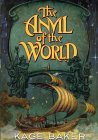
Kage Baker is best known for her short fiction and a series of SF books – The Company. What is less known is that she has written fantasy as well, and it’s quite good. The Anvil of the World (US, UK, Canada) is a mosaic novel that is heavy in satire and subversion of fantasy norms – a book that I enjoyed quite a bit (full review – it’s one of my earliest, so don’t hold that against me :).

About The Anvil of the World:


And now, a fantasy. The cast:

The CHILDREN OF THE SUN are an energetic, mechanically-minded race, offspring (so their legends say) of a blacksmith-god and a fire-goddess, long ages ago. Sanguine, optimistic, quarrelsome, artistic, inventive yet a bit careless with their technology. They live in stone cities. Long ago some immense catastrophe nearly wiped them out, a fact they cheerfully ignore as their slag heaps grow ever higher, as their cities grow ever more crowded.

The YENDRI are a forest-dwelling people, refugees from ancient slavery in another land, led to freedom by a Holy Child. They have long since settled into a pastoral life of meditation and other spiritual pursuits, which would be perfectly idyllic but for two things: they can’t abide the Children of the Sun, whom they see as vulgar and destructive, and their Holy Child grew up and married someone they despise even more bitterly than the Children of the Sun.

DEMONS. No, we’re not talking about Eeeevil and the hosts of Hell. These demons are elementals, insubstantial unless given bodies, with a ratio of Good to Evil about the same as any other race. Some of them are quite intelligent; some of them are abysmally stupid. All are powerful and dangerous if crossed. Many of them have gone into service in exchange for corporeal forms, and they serve a shadowy figure known as the Master of the Mountain… who happens to be the husband of the Green Saint, formerly the Holy Child of the Yendri.

Complications:

A Child of the Sun going by the alias of Smith, for reasons best known to himself, has a hidden destiny. It requires that he change addresses a lot. He’s not getting any younger, though, and, times being what they are, he accepts a job as a caravan master…

The Master of the Mountain and the Green Saint have had children. A lot of children. In fact, they have released a rather large brood of semidivine semidemonic highly-conflicted offspring on the world. Certain extremist elements amongst the Yendri are really, really angry about this, regarding the children’s very existence as Sacrilege…

The Children of the Sun have reached critical mass, and their fate is about to be shaped on the anvil of the world. Will they perish or survive? The past rises like a ghost, old scandals are raked up, long-buried secrets are brought to light—and Smith discovers he is not the only one with something to hide…

She is returning to fantasy with a new release coming from Tor in September – The House of the Stag (US, UK, Canada), set in the same world as The Anvil of the World.

Thursday, July 17, 2008

Dr. Horrible’s Viral Sing-Along

Well, I have to admit, I’m really digging Dr. Horrible’s Sing-Along Blog. I’m at a least mild fanboy of Joss Whedon so I had to check it out. Nathan Fillion is always fun and I love the way Neil Patrick Harris has reinvented himself since his wonderful bit part in Harold and Kumar go to White Castle. Doogie bears watching.

Enjoy – it’s still free, but not for long.

.

Wednesday, July 16, 2008

NPR to Slash Science Friday?

I saw this today and it makes me very sad:

NPR is cutting funding by 60% for the immensely popular Science Friday starting in October, as part of budget problems. SF has 1.3 million listeners per week and 10 million podcast downloads plus science videos, blogs (it has the only full time science reporter based in Beijing), and more. It is one of the successes in engaging the public in science but also talking to scientists ourselves.

An email forwarded from former NSF director Rita Colwell, says the show is short about $500K of the annual $950K budget, which means Science Friday will either go off the air or stay on in a greatly diminished form until or unless new funds are found. What's most surprising to me is that NPR says it will no longer seek foundation underwriting for Science Friday: Rita says if Science Friday is to stay on the air, it is up to the scientific community to raise the money for it.
(source)

I can’t find any verifying information on this yet, but I find this to be very dangerous. At this point in time, this nation needs more, not less science coverage. NPR is the most reputable news sources out there, and this action is disheartening beyond words. Please spread the word, make ruckus and let’s make sure this doesn’t happen – the way I figure it, one less reporter in Iraq could cover the cost.

Friday, July 11, 2008

Blurb Worthy

Today I received a copy of the new release Multireal by David Louis Edelman (US, UK, Canada). Somewhat to my surprise, I find myself in the blurb section with snippets from my review of Infoquake (US, UK, Canada), the first book in this trilogy. As far as I know, this is my first blurb (though I assume there is one in the newer version of Infoquake as well) and it’s the first time I’ve noticed a dedicated section of ‘Blogger Blurbs’. I’m joined, of course, by a lot of familiar names and a few that have faded in the accelerated time of the internet.

I don’t aim for blurbs – I just say what I think. Sometimes, ‘blurb-worthy’ words are strung together, often, even praise of high-order, would simply make for a poor blurb. But the narcissist in me is proud to see my name in print. And for some strange reason, I’m now even more anxious to read Multireal – was this all just a conspiracy to get me to read this book sooner than I would have otherwise?

Miscellany of Links


After a wonderfully relaxing holiday weekend, here are some of the links I’ve followed with interest this week.
  • ‘Controversial’ blogger Gabe Chouinard is back on the scene with a new blog Mysterious Outposts.

  • Poll shows Obama* winning in Arizona – first polls can be very wrong and this one stands apart from the others. But, something close to 1/3 of eligible voters in Arizona didn’t live in the state when McCain was last elected to the Senate. I think that Arizona is going to be much closer than many think.

* I think that my Word spell checker is a right-wing blogger since it wants me to replace Obama with Osama.

Tuesday, July 08, 2008

It’s Official – All SFF Awards Are Useless

Ok, the title is a bit dramatic, but all SFF awards should be viewed with heavy skepticism. The Locus Awards were just released – these were the only major SFF award that anyone could vote for – as close to a true popular award as you could get in the SFF world. Well Neil Clark and Niall Harrison have voiced some very justified complaints about rule changes that were made by Locus after the votes were submitted. Apparently, subscribers to Locus are so much more important than the rest of us that their votes get to count twice. Yep, a subscriber’s opinion is worth double that of a non-subscriber.

So, the Locus Awards now join the ranks of the Nebulas and Hugos as awards that have results skewed enough to make them rather meaningless. The Nebulas have become little more than a popularity contest among writers with nominating rules that could confuse rocket scientists (but would probably make sense to the IRS). The Hugos have become a joke with such a small percentage of members of a club with membership fees actually voting that I have no idea who is deciding things. My feeling is that the results are heavily skewed by authors, editors, and over-weight, Baby Boomer trekkies that are most comfortable at home in a basement speaking Klingon.

The World Fantasy Award is at least transparent in that it’s a juried award whose judges are known. Perhaps this leaves the annual poll of the SF Site as one of the best judges of what may actually be award worthy with both an editor poll and reader poll.

Anyway, the bottom line is that I don’t take SFF awards very seriously and I’d recommend that others at least be skeptical.

Caveat Emptor!

Tuesday, July 01, 2008

It Sure is Pretty

I have no idea when I might get around to reading it, but The Last Realm: Book One, Dragonscarpe by Pat McNamara, Michael Dutkiewicz and Gary Turner (US, UK, Canada) is definitely a nice looking book. It's a full-length, coffee-table sized hardback illustrated novel.

Anyway, I'm off to visit family for a few days and will be beyond internet, sunning my beluga-white, small whale of a body while water skiing and fishing. Enjoy the holiday weekend (assuming it is a holiday for you).

Review: Toll the Hounds by Steven Erikson

Toll:
(v) ring slowly
(v) charge a fee for using
(n) value measured by what must be given or done or undergone to obtain something


As I sit here somewhat shell-shocked after reading Toll the Hounds (US, UK, Canada) by Steven Erikson, I can’t help but reflect on how perfectly the title fits. At once evocative and somewhat confounding to the tongue, I almost want to question if the title is correct. In the end, whether you attribute the title to a verb or noun, it is the ideal representation of the words contained within in what may be the best written volume so far in Steven Erikson’s momentous epic fantasy series: The Malazan Book of the Fallen.

Toll the Hounds is the eighth volume in this ten-volume series, and it took me until the seventh figure out what I feel is one of the most important perspectives with which to approach this series – this is the story of the fallen. The obvious perspective to approach an epic tale with is to concentrate on the living, the survivors – I think to understand the true heart of this series one must concentrate on the fallen, those that don’t live to see the end. The war central to it all is not a simple war or a series of separate-but-related wars – this is a war of the gods encompassing all and nothing is immune. Death can visit anyone – soldiers, bystanders, and the gods themselves. It’s the stories of those that don’t survive that provide the sad lessons and depressing hope – they are the price, the toll.

In Toll the Hounds Erikson returns to the beginning – the continent and remaining survivors we first meet in Gardens of the Moon (US, UK, Canada), the first book in the series. The endgame is approaching and it's all the more appropriate that we go back to where it began for us – the great and independent city of Darujhistan. A large number of threads are woven together in ever increasing anticipation of the biggest convergence of power yet to occur, a convergence with a shattering toll. If you are really interested in a plot summary – Pat exhaustively provides – but I’ll leave it at this is the extension of the story fans have been following for the previous seven volumes.

For the eighth volume of The Malazan Book of the Fallen, Erikson shifts his writing style a bit. Always on the verbose side, things are notched up as Toll the Hounds is partially narrated by the humorous, often-confusing, often-annoying, Kruppe – a rotund man who loves the sound of his voice, good pastry and wine. This approach, along with many of the characters followed, leads to a more introspective feel for the book, especially in the first half. Combined with the shear number of subplots followed, the beginning feels slow, disorientating, and overwritten – in spite of the improved skill Erikson is clearly wielding. At 200 pages into Toll the Hounds, I believed this was a bad decision; at 400 pages I was thinking my earlier judgment may have been hasty. By the end of the book I was fully convinced of the correctness of this choice and somewhat awed by the skill wielded by Erikson.

Erikson’s shift in style will certainly rub some readers the wrong way – it makes an already verbose writer even more so. The number of plots feels unnecessary, especially toward the beginning of the book, and disorients the reader. However, late in novel, I feel the following passage answers these criticisms.

‘Sad truth,’ Kruppe said – his audience of none sighing in agreement – ‘that a tendency towards verbal excess can so defeat the precision of meaning. That intent can be so well disguised in majestic plethora of nuance, of rhythm both serious and mocking, of this penchant for self-referential slyness, that the unwitting simply skip on past – imagining their time to be so precious, imagining themselves above all manner of conviction, save that of their own witty perfection.' Sigh and sigh again.

At first I was unconvinced by this shift for a volume so late in an already established series – I thought that this approach would make for a singularly spectacular stand-alone novel, but was misplaced in the later half of a series. The concentration on so many subplots didn’t work at the start. However, by the end, I realized why it does work and why it fits so well with Erikson’s thematic goals. Erikson has always shown us the everyman (or everywoman), be it a soldier, assassin, caravan guard, or town drunk. His story of a great war among the gods is largely told not from the perspective of the leaders, the powerful, the nobles, but from the grunt on the front lines who doesn’t know what is going on. Toll the Hounds is no different – and it’s the very realization of that toll on everyman and everywoman that Erikson wants us to see. Toll the Hounds accomplishes this aim better than most of the volumes in The Malazan Book of the Fallen.

Erikson often falls to the temptation of becoming overly condemning of the modern world in his writing – in such a way that looses subtly, jerking the reader from that wonderfully realized world and hurting the story at hand. Toll the Hounds dials this down a bit – Erikson is every bit as condemning, but the in-your-face and almost didactic feel isn’t present. Likewise, in previous volumes, the humor so often attempted feels forced, while in Toll the Hounds, he balances it just right. One scene is sure to rise above the rest, with a high-noon style confrontation, paying satirical homage to a medieval joust, that had me hearing an Ennio Morricone soundtrack in a Sergio Leone setting. With all the surrounding tragedy – it’s this scene that sticks with me (of course that’s the way of my sense of humor).

Fully realizing that I am a biased fanboy when it comes to this series, Toll the Hounds is a clear improvement over the previous two volumes and possibly the best effort yet. I am more convinced than ever that Erikson is writing the best and most powerful epic fantasy series around and I’m already eagerly anticipating the next volume – Dust of Dreams (US, UK, Canada). In spite of what some will feel to be weaknesses, Toll the Hounds is a superior entry in The Malazan Book of the Fallen and the most thrilling read I’ve had in a long time. 8.5/10

Related Posts: Interview with Steven Erikson, Reaper's Gale review, The Bonehunters review, The Lees of Laughter's End review, Return of the Crimson Guard review, Crack'd Pot Trail Review

Thursday, June 26, 2008

Review: Already Dead by Charlie Huston

Charlie Huston's Already Dead (US, UK, Canada) takes the prototypical hard-boiled, noir detective template and injects it into a world of vampires. The result is not the Buffy-inspired urban fantasy romp that dominates the fantasy market these days, but a true noir detective tale that happens to star a vampire struggling for independence in clan dominated underworld.

Joe Pitt is fed up with the warring vampire clans and their hierarchy of rule. He ekes out an existence as a rogue living in one clan’s territory (The Society) while performing the odd job for various clients, including the dominant rival clan (The Coalition) of mid-town Manhattan. Clan tyranny and politics make it difficult on an independent in the secret underworld of vampires and Pitt walks a fine line playing the various factions off one another as he struggles to survive.

After an encounter with a trio of squatters infected with a flesh-eating strain of bacteria (aka zombies), Pitt ends up in unpleasant encounters with the leaders of both the Coalition and Society. As a result he is left with a new job through the Coalition – to find the missing daughter of a rich and powerful woman. Relatively standard progression occurs as Pitt investigates with an escalation in complexity and danger that sweeps him away, revealing the man behind the vampire and the sometimes moralistic rage encompassing both.

Huston’s world offers clever and adequate explanations for the how and why behind vampirism other supernatural phenomenon. Vampires are infected with an unknown to science virus colloquial known as the vyrus. It feeds upon human blood and gives the infected superhuman qualities that enable them to become superior hunters. The vampires of Huston’s world laugh at, subvert, utilize, and manipulate pop-culture’s embracing of vampires. Zombies result from an infection of flesh-eating bacteria that animates its dying host with hormones to keep it searching for other food sources (i.e. victims to infect). Brains are craved due to their high content of valuable hormones used to keep the host viable.

Huston envisions the dark side of Manhattan most choose to look past while creating the perfect sense of antagonistic paranoia. This world of the dispossessed, criminals, and others exists and thrives beyond the law with the vampire clans even further beneath this underworld. Here the clans both supplement and replace the organized crime networks common to the noir world where the rich and powerful, human and vampire alike, use and abuse this world to their own ends.

The best part of Already Dead is Joe Pitt – a classic anti-hero, noir detective-who-is-not-actually-a-detective. Pitt’s history brings an extra dimension of depth often missing – a childhood of horrible abuse, an adolescence and young-adulthood of abusing, a role as enforcer within a vampire clan, and finally, a rejection of it all and the attainment of a some-what flawed moral high ground and sense of justice. Much of this comes about in his introspective thoughts surrounding his girlfriend, Evie – a young HIV-infected bartender. She refuses to risk infecting Pitt, and Pitt struggles with the knowledge that his vampirism, unknown to Evie, could cure her HIV with curse of his affliction.

This classic noir story with zombies, vampires, pornography, evil corporate moguls, clan warfare, and a hard-ass, flawed, moralistic rogue vampire proves to be a fast-paced, engaging read that I very much enjoyed. I eagerly anticipate the further adventures of Joe Pitt in No Dominion (US, UK, Canada), Half the Blood of Brooklyn (US, UK, Canada), and forthcoming Every Last Drop (US, UK, Canada). 8/10

Thursday, June 19, 2008

Review: Move Under Ground by Nick Mamatas

Imagine Mister Toad’s Wild Ride told from the perspective of an alcoholic, mentally unstable, beat poet in 1960’s America. Imagine a Lovecraftian nightmare realized in a stream-of-consciousness as Cthulhu arrives and enslaves the world. Imagine a humanist sociopolitical satire wrapped in postmodernism (or perhaps even post-postmodernism). Imagine Move Under Ground (US, UK, Canada) by Nick Mamatas.

Recovering from a mental breakdown, Jack Kerouac witnesses the rise R’lyeh from the Pacific Ocean. A surreal journey follows through roads of America with Jack Kerouac, Neil Cassady, and William S. Burroughs – On the Road (
US, UK, Canada) in reverse during a Lovecraftian apocalypse, all told through the psychedelic point of view of an alcoholic, mentally unstable, beat poet, never knowing what’s real and what’s hallucination.

The premise behind Move Under Ground really grabbed me – it’s interesting, exciting and promising. I find this somewhat strange since I’m not all that familiar with the writing of Lovecraft and Cthulhu lore, and I’ve never read anything by the Beats – and most pointedly, I’ve not read On the Road by Kerouac. With this lack of background I’m sure I missed many a passing reference and limited my potential enjoyment of the book, however, at this point I remain undecided about how much that impacted my reading of the book.

It’s this feeling of uncertainty that dominates my thoughts after reading the book. I cannot even decide if I liked Move Under Ground or not. The prose is dense, the point of view difficult to see through and the short 160 pages read like more than double that amount – not necessarily in a good way. With book’s density and references to works I have little familiarity with, it’s not particularly approachable for me. However, it is compelling in a way I find difficult to express. Kerouac has always been considered a very human author and that comes through here as well – for all I wanted to stop reading, I couldn’t help but continue.

Related to these emotions above are what I’ll classify as the post-modern qualities of Move Under Ground. The satirical edge attacks sociopolitical ideals in the fantastical, unusual, and psychedelic framework of Lovecraftian nightmare. In many ways, we see the deconstruction of that ‘ideal’ American society of the early 1960’s at the same time we see a deconstruction of the Beat Generation that rejected those ideals. These complexities make me want to tag Move Under Ground with a post-postmodernism label, but that would be stretching my understanding of the subject more than a little.

Underlying all this is an almost humanistic exploration of a troubled, scarred, even pathetic American. After all is said and done, we get the first lucid picture of Kerouac and the bitter shell of a man he has become. Is this realism the underlying heart of Move Under Ground? I can’t really say, but it just might be.

As I indicated above, through all this thought and exploration, I still don’t know that I enjoyed reading Move Under Ground. It was equally compelling and a chore to read – I didn’t want to continue reading, yet I did. My emotional response seems as conflicted as the words of the book. However, in the end, it’s these conflicted emotions, this exploration, my uncertainty that make realize that yes, Move Under Ground is great book, if not one I can say that I liked. 4-9/10

LinkWithin

Related Posts Plugin for WordPress, Blogger...