Showing posts with label Kage Baker. Show all posts

Tuesday, August 04, 2009

World Fantasy Award Nominees Announced

So, via Twitter I see that the 2009 World Fantasy Award nominees covering the 2008 award year have been announced. I generally like this award more than most of the main-stream SFF awards since it is a juried-award, though due to whoever the jury is made up of, the sort of books that get nominated year-to-year can vary quit a bit. Anyway, this year’s nominations for Best Novel are below:

The House of the Stag, Kage Baker (
US, UK, Canada, Indiebound)
The Shadow Year, Jeffrey Ford (
US, UK, Canada, Indiebound)
The Graveyard Book, Neil Gaiman (
US, UK, Canada, Indiebound)
Pandemonium, Daryl Gregory (
US, UK, Canada, Indiebound)
Tender Morsels, Margo Lanagan (
US, UK, Canada, Indiebound)

What’s interesting about this year’s nominees is that I’ve actually read 3 out of the 5 books.

The House of the Stag by Kage Baker
Pandemonium by Daryl Gregory
Tender Morsels by Margo Lanagan

Of those 3, I think that Tender Morsels really stands out as the front-runner (even though personally, I didn’t care for it). I also find it interesting that at least 2 of these books are considered YA – see some of the best SFF being written right now is for the YA market and it crosses-over to the adult market very well. We’ll see where it goes from here.

Friday, January 09, 2009

The House of the Stag by Kage Baker


My review of The House of the Stag by Kage Baker (US, UK, Canada) is up over at BookSpotCentral, where I'm an Associate Reviewer (I review 4 or 5 books a year over there). While flawed, it is a fun deconstruction of Dark Lord fantasy trope.

Friday, July 18, 2008

Forgotten Friday’s: Kage Baker Writes Fantasy Too

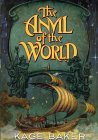
Kage Baker is best known for her short fiction and a series of SF books – The Company. What is less known is that she has written fantasy as well, and it’s quite good. The Anvil of the World (US, UK, Canada) is a mosaic novel that is heavy in satire and subversion of fantasy norms – a book that I enjoyed quite a bit (full review – it’s one of my earliest, so don’t hold that against me :).

About The Anvil of the World:


And now, a fantasy. The cast:

The CHILDREN OF THE SUN are an energetic, mechanically-minded race, offspring (so their legends say) of a blacksmith-god and a fire-goddess, long ages ago. Sanguine, optimistic, quarrelsome, artistic, inventive yet a bit careless with their technology. They live in stone cities. Long ago some immense catastrophe nearly wiped them out, a fact they cheerfully ignore as their slag heaps grow ever higher, as their cities grow ever more crowded.

The YENDRI are a forest-dwelling people, refugees from ancient slavery in another land, led to freedom by a Holy Child. They have long since settled into a pastoral life of meditation and other spiritual pursuits, which would be perfectly idyllic but for two things: they can’t abide the Children of the Sun, whom they see as vulgar and destructive, and their Holy Child grew up and married someone they despise even more bitterly than the Children of the Sun.

DEMONS. No, we’re not talking about Eeeevil and the hosts of Hell. These demons are elementals, insubstantial unless given bodies, with a ratio of Good to Evil about the same as any other race. Some of them are quite intelligent; some of them are abysmally stupid. All are powerful and dangerous if crossed. Many of them have gone into service in exchange for corporeal forms, and they serve a shadowy figure known as the Master of the Mountain… who happens to be the husband of the Green Saint, formerly the Holy Child of the Yendri.

Complications:

A Child of the Sun going by the alias of Smith, for reasons best known to himself, has a hidden destiny. It requires that he change addresses a lot. He’s not getting any younger, though, and, times being what they are, he accepts a job as a caravan master…

The Master of the Mountain and the Green Saint have had children. A lot of children. In fact, they have released a rather large brood of semidivine semidemonic highly-conflicted offspring on the world. Certain extremist elements amongst the Yendri are really, really angry about this, regarding the children’s very existence as Sacrilege…

The Children of the Sun have reached critical mass, and their fate is about to be shaped on the anvil of the world. Will they perish or survive? The past rises like a ghost, old scandals are raked up, long-buried secrets are brought to light—and Smith discovers he is not the only one with something to hide…

She is returning to fantasy with a new release coming from Tor in September – The House of the Stag (US, UK, Canada), set in the same world as The Anvil of the World.

Wednesday, January 17, 2007

Fast Forward 1 Edited by Lou Anders

Lou Anders has a very ambitious goal – to start a new anthology series in the tradition of past landmarks like Damon Knight’s Orbit and Frederik Pohl’s Star SF. I have not read those series, but it’s safe to say that Anders is on the right track with Fast Forward 1. This start to a knew series contains stories by such genre big names as Gene Wolfe, Larry Niven, and Mike Resnick and hot, newer voices such as Kage Baker, Robert Charles Wilson, Justina Robson, Paolo Bacigalupi, Ian McDonald and many more.

In the Introduction: “Welcome to the Future”, he provides another essay in a long tradition of essays lauding the importance and relevance of science fiction to our world. Honestly, it doesn’t say anything really new, but reiterated much of what others have said, however, he does say it well.

Anders speaks to science fiction’s ability to show us something new, to make us think. He goes on to remind us that so many important people behind advances in our society don’t just stand on the shoulders of previous scientists and engineers, but also on the inspiration provided by early science fiction writers. Science fiction is critical thought, it is skepticism, and it is rationalism. In that spirit, I’ll let Anders’ own words from the Introduction speak for themselves.

Here, then, are twenty-one windows on the future, as seen through the imagination of twenty-three different talents. Their collective visions take us from the far future to the day just after tomorrow. In their hands, science fiction is indeed a tool for making sense of a changing world. It’s not the only such tool, but it is an amazingly effective one. Who knew enlightenment could so much fun?
Each of the twenty-one stories accomplishes these goals in some way, each in their own way. “Small Offerings” by Paolo Bacigalupi shows us the poison of our society and its direct affect on the next generation in a dark, highly symbolic story that is so disturbing because we can envision it happening. “Aristotle OS” by Tony Ballantyne provides an equally saddening view of what our world could be, if only just…

Humanity of the far future is visited in “Plotters and Shooters” by Kage Baker, “Time for the Snake” by A.M. Dellamonica, and “The Terror Bard” by Larry Niven and Brenda Cooper. Humanity of a less distant future is visited in others.

Consequences reign for many – whether it’s the rather obvious consequence of rescuing a genetically derived saber-tooth tiger in “Pride” by Mary A. Turzillo or the less obvious consequences of the world’s greatest swordsman in “The Hour of Sheep” by Gene Wolf.

Consequence’s eternal companion, choice, follows right along. In “Solomon’s Choice” by Mike Resnick and Nancy Kress a doctor is faced with two unacceptable choices – is their a third? Will humanity choose to accept help from an unknown origin in “Settlements” by George Zebrowski, or will simply nuke the perceived enemy?

Elizabeth Bear brings attention to the teen ‘choking’ or ‘pass-out game’ in an interesting combination with quantum computers. Robyn Hitchcock provides two poetic interludes and “Sideways from Now” is beautifully told novella of love lost and telepathy by John Meany.

What science fiction anthology could be complete without satire – it’s no surprise to me that my favorites of the collection would be here. “Jesus Christ, Reanimator” by Ken Macleod relates the story of Christ’s second coming through the eyes of a reporter covering the event all the way to its inevitable conclusion. Anders appropriately chooses to conclude the anthology “Wikiworld” by Paul Di Fillipo. The wonderfully witty prose and plotting allow the anthology to end in a humorously satisfying stalemate.

Short stories are always difficult for me to review, and collections even more so. Certain stories always exceed those around them, and others can be total failures. Anders has done well to avoid the failures, though some are as forgettable as the page number. Of course others still keep me awake at night. Fast Forward 1 is better than most – 7.5/10.

EDIT: A short update post and a link to the Introduction.

Friday, February 03, 2006


The Anvil of the World by Kage Baker

The Anvil of the World by Kage Baker is an intriguing first effort in the fantasy genre (Baker is better known for her sci-fi). The book is a bit hard to classify or pigeon-hole, which is a good thing. If you combine the classic fantasy motif of a mysterious protagonist with a shady past with a dash (or two) of Terry Pratchett, then you’re getting close to what Baker has created with in The Anvil of the World.

Smith is a Child of the Sun running from his past and looking for work in the breadbasket city of Troon. His cousin has hired him as the caravan master for a journey to Salesh by the Sea. Smith anticipates an easy trip across the land, and is disappointed when events do not allow this. It seems that the caravan is full of ‘Smith’s’ – we have Mrs. Smith the gourmet cook, Mr. and Mrs. Smith and their three children, some other Smith’s, a runner, a courier, Lord Ermenwyr and his nurse, and a mysterious traveler of the Yendri race. No one is of course who they seem, and are any of them actually named Smith?

Attacks, death, demons, injuries, destroyed cargo, and a crying baby keep things interesting as the caravan journeys to the sea. We even learn who some of our mysterious travelers are along the way.

The tale continues in Salesh as Smith once again changes careers in his quest to avoid the past, and of course, a journey of destiny with the fate of the world at stake.

The Anvil of the World starts off with something of a slow start – I found myself waiting see what’s going on and not particularly caring about the characters. However, don’t despair – sticking with the book is well rewarded. Slowly, Baker’s subtle use of humor and pun sinks in and the characters are masterfully rounded out. The subtle humor becomes not so subtle at times and social commentary begins to bleed from the story, all in clever, humorous ways that I thoroughly enjoyed. A magical duel between mages may well be the best I’ve ever read and brings a whole new understanding of the old saying: ‘Sticks and stones may break my bones, but words will never hurt me’.

The book is fast paced, a quick read, and overall, well done. The writing can be inconsistent at times, but its witty nature easily overcomes this. Kage Baker is an author whose books I will now be on the lookout for, and recommend you do the same. On my 10 point rating scale where 10 is unsurpassed and 5 is a take-it or leave-it novel, The Anvil of the World rates a solid 7 – a hearty recommendation.

LinkWithin

Related Posts Plugin for WordPress, Blogger...