Showing posts with label Memory Sorrow and Thorn. Show all posts

Monday, January 23, 2017

Review: The Heart of What Was Lost by Tad Williams

Tad Williams returns to the world of Osten Ard after 20+ years in The Heart of What Was Lost. In part, this short novel serves as a reintroduction of Osten Ard in advance of the forthcoming trilogy: The Last King of Osten Ard. But more than a simple reintroduction, I found The Heart of What Was Lost to be a very meta coda to the Memory, Sorrow, and Thorn series – a response coming 20 years later, in part admitting the shortcomings of the previous series and state of epic fantasy fiction of the times, a message of leadership and the future for today, and what I suspect is a tease of changes to come in The Last King of Osten Ard.

The Heart of What Was Lost is set in the aftermath of the events that end the Memory, Sorrow, and Thorn series, and feature dueling perspectives of a human army pursuing the remnant forces of the Norns with intent to eradicate them and that of the Norns themselves. One of the strongest aspects of the Memory, Sorrow, and Thorn series was its portrayal of the horrors of war, rather than the traditional glorification often seen in fantasy (or at least fantasy of the 1980s and 1990s). This is the core of The Heart of What Was Lost as the army of the Northmen seeks genocide in vengeance to the horrors the Norns brought upon people and the world. This is balanced by the perspective of the Norns fleeing, only thinking of the survival of their race and doing everything they can to achieve that survival.

The Heart of What Was Lost is the story of two leaders of their people, how they fight to survive, and ultimately, the sacrifices they will make. One leader serves as the heart of their people, the other people have lost their heart and are seemingly directionless in their efforts to survive. Both are forced to look at the traditions of the past and confront what the future can be. Are the traditions and actions of the past going to bring about a future they can be proud of?

While it’s not the focus, the weight and responsibility of leadership is on full display. True leadership is not an act of the selfishness, but one of sacrifice. Leadership is about the people and the future, it doesn’t relish in the past, and it makes the hard choice. In The Heart of What Was Lost, the balance of life, death and survival brings focus and immediacy to it all. Can the leaders do what is needed?

A third perspective is brought in, not only as a balance, but to give those of us who aren’t leaders something we can directly relate to. An everyman, a plain soldier far from home. This third point of view isn’t a portrayal of grand sacrifice or such, but this is basic survival. In the survival rivalries of the past and home are discarded as unimportant, basic friendship is the mean to survival, and continuing when death arrives. Of course there’s plenty of ‘war sucks’ to all this, but the way things end is tear-jerking tragedy. The journeys of The Heart of What Was Lost feel like interwoven Greek Tragedies, but none more than that of our every soldier. And the tragic end, is also the challenge that Williams sets for us all. For the sacrifice of leadership is not enough. The every person must step as well, and it isn’t easy. For the sake of the future, you may be asked to cut off the head of the reanimated corpse of your only friend. Over dramatic? When I look at the world around me today, I think not (but I sure wish it was).

For all of the powerful ideas on display in The Heart of What Was, I must admit that it took me time to really get into the book, even though it’s a relatively short novel. I think that this is in part due to it being over 10 years since I read the books in the Memory, Sorrow, and Thorn trilogy, so while I don’t think it’s needed to be familiar with those books, a lack of familiarity may make it a bit more difficult to connect with the story initially. Though I also believe that bleak, dark, horrors of war basis was also a barrier for me as it’s just not the sort of story I gravitate toward right now. However, as indicated by my thoughts above, perseverance is rewarded.

At the top I mentioned some of the meta feeling I got from The Heart of What Was Lost. Yes, much of this is routed in a message of fighting for the future that resonates with me right now. But it’s more – let’s be honest, some of the world and society in Memory, Sorrow, and Thorn feels dated in the context of the epic fantasy being written today. So, how does one deal with that dated feeling that is so obvious in a sequel? Most obvious is that The Heart of What Was Lost is man’s story – men are everywhere, with only a couple of token women. It’s striking and it was one of the barriers to me getting into the story. But in the end, Williams acknowledges this shortcoming, and further mocks the concept of ‘women and children’ not standing up for themselves. My hope is that this is his way of clearing the page for changes to come in the forthcoming trilogy.

In short, after a slow start, I very much enjoyed The Heart of What Was Lost. In spite of a few shortcomings, it resonates deeply with what I see in the world around me. It encourages and shows of view of hope, hope that we’ll need to fight for.

Books/Series of Osten Ard:

Memory, Sorrow, and Thorn (my review of the trilogy*)

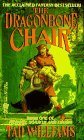
The Dragonbone Chair (my review*, Amazon)          
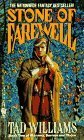
Stone of Farewell (my review*, Amazon)
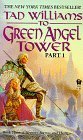
To Green Angel Tower Part 1 (my review*, Amazon)
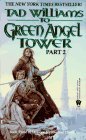
To Green Angel Tower Part 2 (my review*, Amazon)

The Heart of What Was Lost (Amazon)

The Last King of Osten Ard (Forthcoming Trilogy)

The Witchwood Crown (Amazon, coming June 2017)
Empire of Grass (forthcoming)
The Navigator’s Children (forthcoming)

*These reviews were written near the beginning of this blogging adventure, and I like to believe that I’ve gotten a lot better through the years. So, enjoy these ‘early years’ reviews.


An Aside for Some Personal Indulgence

Feel free to ignore the following as it’s more about me than The Heart of What Was Lost….

The Heart of What Was Lost brought about another reaction in me that I feel like writing about, even though I suspect it matters to very few. It brought back a passion for reviewing. It’s no secret that I review far less these days than I once did, and the vast majority of the few reviews I do put up are ‘Mini-Reviews’ that say little more than ‘I liked this book, you should read it’. It’s rare for me to really dive in, fully review a book, and explore my response to it.

Reality is that this is likely more of a one-off than a trend. Life keeps landing punch after punch these days, meaning I don’t have the time or emotional capacity for much deep reviewing. And the backlog of reviews I still plan to write shows that even the short, basic reviews will come at a rather slow pace. But, it was nice to be reminded that I do have ideas that I want to share, that I feel I can add to the conversation about a book beyond ‘read it, it was good’. And that is another reason why I really enjoyed The Heart of What Was Lost.

I could go on about ‘The Heart of What Was Lost in Reviewing’, but that level of wankery really isn’t necessary J


Sunday, November 05, 2006

Memory, Sorry, and Thorn Trilogy – Tad Williams

This trilogy is not quite a trilogy. Translation: the final book is big – so big that it was divided into two books for paperback publishing (To Green Angel Tower part 1 and 2). Why do I start out with this? It illustrates the main weakness of the series for me – it could have been tightened up, especially in the first book, The Dragonbone Chair. It starts slow, but once it gets moving it is a well-written and entertaining story.

In many ways, this is a standard/cliché epic fantasy. The main character, Simon, is a low-born servant, with mysterious parentage, who is thrown into extraordinary circumstances over and over again during a conflict that could result in the end of the world. There are ‘elves’, giants, dragons, trolls, ‘wizards’, and other beasts. There is no escaping the similarities to Tolkien, but that is not necessarily a bad thing. While much of the story will seem familiar, there are enough unique moments and surprises to keep it fresh. In the end it comes to the simple fact that Williams tells a good and entertaining story.

Simon is a simple orphan kitchen boy; a typical teen with angst, big dreams, and difficulty with authority. He is taken under the wing of the mysterious Dr. Morgenes, reputed to actually be a wizard. Times are changing, the old and loved King dies and is succeeded by his dark and brooding son, Elias. With Elias comes his advisor, a priest who inspires little but fear and is a darkly powerful sorcerer. The inevitable conflict arises between King Elias and his brother, Joshua.

Events around Simon spiral out of control and he flees for his life from the castle he has always known as home to where Joshua is building a resistance to King Elias and his sorcerous advisor, Pyrates. Times are tough, people are restless, and evil creatures of legend prowl the lands – war is coming, and it is more than just a war of succession. The undead Storm King is pulling the strings.

Great adventures and battles occur. Simon comes face to face with elves, trolls, giants, a dragon, and even a beautiful princess.

What makes Williams’ take on Tolkien-esque fantasy seem novel and fresh is the accessibility. His writing style is more contemporary and he focuses on characters. Interesting parallels between individual characters are drawn, and Simon is one of the more realistic heroes I’ve encountered. Simon’s first battle is one of the best scenes I’ve read of the realization of horrors of war.

The Memory, Sorrow, and Thorn series rates a 7 on 10-point rating scale. I consider it “new classic” in the epic fantasy sub-genre, and strongly recommend it, particularly for fans of epic fantasy.

Related posts: The Dragonbone Chair, Stone of Farewell, To Green Angel Tower

Thursday, November 02, 2006


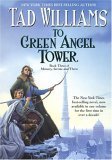
To Green Angel Tower – Tad Williams

It’s not the ideal way to start off a review, but I keep coming back to it – To Green Angel Tower is long. This final installment of Tad William’s Memory, Sorrow, and Thorn trilogy is so long that in its paperback form it had to be released in two volumes – each about 800 pages long. Either volume would be considered a fairly beefy book by itself, together, they are just plain long.

I know I’m coming off a bit rant-ish here, and there is some truth to it, but To Green Angel Tower is at the same time a worthy conclusion to William’s epic saga (did I really just use the word saga?). This book has all the elements of a successful (if somewhat un-original) end – horrible battles, hopelessness, stupid mistakes, super-human heroic action, dark magic, love, death, deception, a happy ending, and enough open ends to leave us wanting more.

The title, To Green Angel Tower, really provides the proper plot summary for this book. The major players of this epic wrap up what has been keeping them busy and converge at the Green Angel Tower – the key location of the end battle, and the place the story began. People take long and difficult roads to get there – some are hurt, even killed, and others are captured or otherwise delayed. Rest is assured; the key players make it where they need to be.

Ok, so here is a (obvious) spoiler – there is a happy ending. Really, could it have been any other way – we all knew it was coming. Our hero wins, but I won’t go as far to say whether he gets the girl or not. Yet there are still enough surprises to catch us off guard, to convince the reader that the end is a bit more than what we knew would happen. Mysteries are at once satisfactorily explained and left for the imagination and desire of more stories to come. Anyway, a good story is more about the adventure, the getting there, than about the end itself.

So, by now you may be wondering if actually like the book(s) or not. Of course I did. While all usual clichés are there, Williams does tell it well and even manages to surprise. There is character growth, and I’ve not ever read a better scene where a young hero realizes the true horror of war.
I’ve said it in other reviews of the series – this really is a “new-classic”. It is the next step beyond Tolkien – an example where the genre moved forward. On my 10-point rating scale, To Green Angel Tower (parts 1 and 2 together), rates a 6.5-7.

Wednesday, October 11, 2006


Stone of Farewell by Tad Williams

Ahh…the middle book of a trilogy, like the ugly stepsister is often of little note, the weakest installment, lacking the magical beginning of the first and the massive impact of the conclusion. Stone of Farewell serves as this bridge from Dragonbone Chair to To Green Angel Tower. However, this book is not the lesser book – it is a better book than Dragonbone Chair, far more interesting and simply better written.

As I’ve said before, Tad Williams doesn’t tread new ground with the Memory, Sorrow, and Thorn trilogy – it is the story of an orphan boy, apparently destined for greatness, in a struggle to save the world. We have many of the usual suspects: an orphan hero, dark wizard, mysterious witch, tyrannical king, exiled prince, desperate princess, trolls, giants, elves, etc. But, Tad Williams does this well. The characters are realistic, people die, interesting parallels are created, growth occurs.

With this being a second installment, I’ll skip the typical plot summary. Suffice to say, the story takes us from the end of the first installment to the beginning of the third. Bad things happen along with a few good, death, cold, separation, and coming together. This book does not stand alone in anyway – it is simply the middle of a large story.

The most notable thing about Stone of Farewell is that it is clearly an improvement from Dragonbone Chair. The story doesn’t bog down or take a too long in gaining inertia. We learn more of the important players, we can guess at what is to come, and carefully set up parallels emerge.

On my 10-point scale, Stone of Farewell scores 7 to 7.5. This series really is a ‘new classic’ in the realm of epic fantasy. It stands on the shoulders of Tolkien and lifts the genre higher – would Bakker look so brilliant without the likes of Robert Jordan and Tad Williams?

Related Reviews: Dragonbone Chair, To Green Angel Tower, Memory, Sorrow, and Thorn Trilogy

Monday, June 05, 2006


The Dragonbone Chair by Tad Williams
Are you looking for a pure fantasy novel/series – adventure, magic, strange creatures, escapism? Are you not interested in (or need a break from) the ‘new weird’, magical realism, post-modern works of SF literature filled with weighty themes and ideas? The Dragonbone Chair by Tad Williams might be exactly what you’re looking for.

The Dragonbone Chair is standard fantasy, full of just about all of the clichés. We have an adolescent male of mysterious (and probably ‘special’) origins, guided by a wise old ‘wizard’, who is thrown into harrowing circumstances beyond his control and understanding. We have the death of a loved monarch, the replacement with a lesser leader, and the advice of an evil sorcerer. There is a greater ‘dark lord’ of sorts, and we have elves, trolls, giants, and other fantastical creatures. Yes, the parallels to Tolkien and other fantasy authors are real, but the story is well done and all its own, even if not terribly original in its basic premise.

The above description can be taken as bad or good depending on your point of view. Many people are looking for exactly what Tad Williams offers us with The Dragonbone Chair, which is the first installment of the Memory, Sorrow, and Thorn trilogy. This is an adventure story – a tale of magic, journey, coming of age, love, hate, and the fate of a world – or another way to look at it, this is the kind of story that made you fall in love with fantasy in the first place. Yes, this tale could be considered ‘young adult’ (though it’ll be shelved in the SF section at bookstore), but it can easily be enjoyed at more advanced ages.

The Dragonbone Chair is the story of Simon, and orphan scullion-boy working in the castle serving as the center of the Osten Ard kingdom. Simon is apprenticed to the castle’s doctor Morgenes in a time when the old king John dies and is succeeded by his son, Elias. Elias brings along his dark advisor, Pyrates, who has forged an alliance with a greater evil. The land is in turmoil and Simon forced into a journey with great implications in the greater conflict. The end brings little conclusion, as journey continues in The Stone of Farewell and concluded in To the Green Angel Tower, which was divided into parts 1 and 2 for the paperback.

One advantage of the Memory, Sorrow, and Thorn trilogy is that it is finished and has been for some time. So those of us tired of having more and more unfinished series on our reading stacks don’t need to fear yet another addition. Another advantage is the wide-range of audience this book is appropriate for – children through adults can enjoy alike (though the books are quite lengthy for younger readers).

Tad Williams has a reputation for slow starts, and after reading The Dragonbone Chair, I have to agree. The beginning is slow-paced and could easily have been tightened significantly. This will be a hurdle for some readers, though the pace picks up significantly later and becomes the adventure anticipated. The writing is a standard fair, with a few mixed-metaphors and marginal characterization – the main characters are decently well-done, with supporting characters less-so. As with many fantasies of this type, strong female characters are a bit lacking.

Caveats aside, I enjoyed The Dragonbone Chair and look forward to continuing the story to its conclusion. While the story is ‘standard’, it is entertaining and just fun to read. On my 10-point rating scale (described in detail here), The Dragonbone Chair rates a 6.5-7. Fans of standard, epic, sword and sorcery style fantasy will love this book and it’s a great introduction to genre for teens, but readers looking for ‘more’ out of their books and something new will probably prefer to pass it by.

LinkWithin

Related Posts Plugin for WordPress, Blogger...