Showing posts with label new weird. Show all posts

Monday, March 11, 2013

Review: The Half-Made World by Felix Gilman

The Half-Made World by Felix Gilman (Indiebound, Book Depository, Amazon) defies easy classification. On one hand it is a standard sort of second-world fantasy that somewhat fits the definition of epic fantasy– though the standard quest is shared by 2 enemies and manages to sweep up an innocent bystander. On another hand, it’s a sort of fantasy western with a modern take on Manifest Destiny-style attitudes, unchecked development, indigenous rights, etc., and with the inclusion of machine-based technology, The Half-Made World is made for slapping the __punk label to it, though I’ve most often seen cyberpunk or steampunk thrown about, which is a bit disappointing as I’d expect it to be more of westernpunk, petropunk, six-shooterpunk, or some other more creative punkness attribute. But most often The Half-Made World is considered Weird, or perhaps Weird Western. I can’t help but agree that the weird label fits it best, though I must admit that it chafes a bit that I’ve decided to utilize labels to frame start of this review.
 
In The Half-Made World physical laws don’t really exist to same extent as in most second-world fantasy, instead Gilman builds his world based on thematic laws. The world is only half-made, and the world only becomes made when ‘Western’-style development occurs, when humans expand their control of the world, and the world is most fully made once control moves from the hardy (and unsophisticated) pioneers of the frontier to the full order of the Line. The world is less made, or even un-made where humans haven’t yet penetrated, where the Folk (think indigenous people) exist with their indefinable magic and symbiosis with the land. Opposing the order of the Line is not the disorder of the un-made, but the near-nihilistic (or perhaps anarchistic or libertarian) Order of the Gun.
 
It’s in this worldbuilding that Gilman really shines – yes, this is a wonderfully built world in the sense of second-world fantasy, but it’s also thematic building. Gilman makes the worldbuilding so much more than just a setting, but a literary exercise in its own right. And at the same time, he playfully subverts himself – for his fully-realized and built world, is only ‘half-made’. The resisting force to order, is the Order of the Gun. This playful use of language to subvert the expected and even what Gilman is attempting to achieve, occurs throughout the book, but is perhaps most recognizable in the first half or so.
 
Balancing the study on worldbuilding is a study on character, with three focus points, and arguably a fourth. Liv is the equivalent of psychologist focusing on madness who unexpectedly (and irrationally?) journeys west for an opportunity of study. Of course, she is recovering from her own mental illness and has an unrealized addiction to opium. Creedmore is a charming, charismatic, and deadly Agent of the Gun. He fills the role of anti-hero as at times he has an apparent heart of gold, yet he kills with abandon, destruction follows his path, selfishness rules whenever possible, and yet he’s always beholden to his the spirit-like force of the Gun and their agenda. Lowery is member of the Line, he is order, he is conformity, he is the face of the unstoppable force. He struggles with self and the paranoia of completely controlled environment. The wild-west doesn’t just unsettle him and the Line, but is its antithesis. A fourth character is the focus of the quest – The General. The General is mad and damaged beyond repair from the forever war waged by the Line. The General also is in possession of the MacGuffin – something that the Line and the Gun both need to win their ever-ongoing fight and both need to keep out of the hands of their bitter enemy. This knowledge is buried inside his madness.
 
This character study is not as fully built as the world in terms of the thematic laws that govern Gilman’s creation, though it’s strong enough to support a balance. And it throws into view, something I haven’t really discussed yet – plot. Yes, there is a plot. The plot is strong enough to drive the story, motivate the characters and survive the world, yet it’s arguably not the point. Perhaps the plot is the actual MacGuffin here, I’m not sure. It sort of makes me want wonder what M. John Harrison would think of it all – after all, this book is either a giant ‘FU’ to Harrison’s views on fantasy and genre, or it’s the logical next step. It’s probably both, and it’s a bit weird as well, which generally makes his sort rather pleased. But I digress.
 
Since The Half-Made World was originally released in 2010, there are quite a few reviews and other reactions that can be found. After looking through a few I noticed that the ending is often panned, or at least highlighted as a relative low point in the book, with almost every one working in the ‘clever’ half-made ending (or similar) comment. I can sort of see why, though I think mostly it’s simply that people want an ending to be a resolution rather than the beginning of yet another adventure. However, remembering that the building blocks behind the world, the characters and even the plot are truly thematic blocks, I think that the ‘half-made ending’ can only be considered entirely appropriate. Though perhaps it functions as a third MacGuffin to which I can only react with maniacal giggling. Anyway, it’s worth noting that The Half-Made World is not a stand-alone and the sequel, The Rise of Ransom City (Indiebound, Book Depository, Amazon), is available, so hopefully the half-made ending will now just be an enticement to continue on that much sooner.
 
Gilman is an author I’ve been hearing good things about for a number of years now, and The Half-Made World has shown me why. It encompasses much of what it means to be genre, yet subverts the stereotype by thematically building everything such that everything has meaning – and the craft that it takes to make it all work is impressive. And work it does – The Half-Made World can function as a fun, fantastically weird western and as a stylistic novel with great thematic depth to be delved, parsed, examined, and even re-made. In that, the appeal is wide and this book should be widely read. So what are waiting for … punk!?
 

Tuesday, November 30, 2010

Review: The Last Page by Anthony Huso

The Last Page by Anthony Huso (Book Depository, Powell’s Books, Indiebound) is turning out to be one of the more interesting SFF debuts of 2010. While it hasn’t garnered the marketing push of some of the more memorable debuts of the past few years, The Last Page has been released to quite a bit of praise from reviewers with wide-ranging comparisons from Harry Potter to China Mièville to Brent Weeks and Daniel Abraham and such varied terms as Epic Fantasy, Steampunk, Urban Fantasy, Lovecraftian Horror, New Weird and Military Fantasy. The jacket description may hint at some of this and actually does a pretty decent job of describing the book, but it can’t capture the undeniable mood and raw talent that Huso invokes through The Last Page. I won’t claim it’s the perfect debut, but it’s one that stands out.

Set in a magically-powered industrial world of factories, military-industrial complex, zeppelins, and international commerce and rivalry The Last Page opens in sort of preparatory academy combined with university where we meet Caliph Howl, the reluctant heir to the throne of The Duchy of Stonehold. We are introduced to Caliph as an intelligent, crafty, vengeful, yet somewhat mediocre student, yet more importantly, we see him meet his mysterious lover, Sena. The remainder and larger part of the story is told primarily through these two points of view as Caliph inherits his crown, inciting a civil war and Sena seeks a book of great power as she at once rapidly ascends within and seeks her independence from the shadowy Witchocracy that she is a key member of.

Huso writes with a relatively dense prose – perhaps most analogous to China Mièville, but certainly independent enough to feel fresh. With this prose comes vivid description, and like early Mièville, the tendency to over-indulge a bit too often. Another suffering of this writing style is the occasional use of large, obscure words when simpler words that don’t require a visit to the dictionary would suffice. Though the positives outweigh the negatives by a fair margin – this style also provides a rich, layered read with visceral descriptions that perfectly set the mood.

As a result of Huso’s use of this style one cannot deny the incredible realization of the world. This isn’t traditional epic fantasy worldbuilding – the world is not fully described, only the details relevant at the moment. It paints a wonderful mood and leaves the mind craving for more. The dark, dirty setting of an industrial world powered by what can only described as magical power is adeptly shown. The inclusion of zeppelins invokes a Steampunk spirit without actually using a Steampunk setting. Politics, economics, international relations all come into play in a world that feels real rather than ideal. Huso doesn’t water-down the details – they are fully present and often confusing, but manage to further build the dark mood of the novel.

Huso creates a complex plot that never completely gels. On one hand I love the approach because it made me work for every bit of understanding and it reflects the lack of complete understanding of actual reality. On the other hand it was downright confusing at times which caused a fair amount of frustration. The biggest fault in this is a failure with his characterization – motives are either never understood or never revealed. Perhaps this reflects complexity of character that mirrors actual people, but it too often felt like Huso played his cards too close to his chest with confusion the result. This becomes a real issue with the conclusion of the novel – it isn’t developed fully, which increases the uncertainty too much and lessens the impact.

Much of The Last Page is a love story between Caliph and Sena, though I’d hardly call it a romance. It’s more of a revelation of two people attempting to discover what love is, two people who have commitments in their lives that at least seem more important than their love lives. In this Huso portrays a relationship between real people with actual lives which stands apart from much of what is seen in the fantasy genre. This love story takes place along side of the rest of the book – I suppose the question remains, was the love story the central part of the book or was just another complication in their lives? I suspect that Huso would be pleased with that sort of questioning, though the end of the book provides answer enough.

Along the way Huso seems to enjoy throwing out a few moral dilemmas of personal and political nature that are relevant to present time, though most boil down to the question of ‘is a little evil OK for the greater good’? He never gives a real answer, but asks the question in several ways to get the reader thinking. He also touches on economics and government intervention a bit, but only just. Nothing is remotely didactic, just questioning, because there aren’t tidy, sound bite answers to these sorts of questions.

One of the aspects that I enjoyed most about The Last Page is that Huso seemed to know just what I would anticipate. I suppose that it could be called subversion of genre tropes or reader expectations, but it felt much more natural. Particularly in the first half of the book, I would think something like ‘that guy will turn out to be the spymaster’ or ‘Caliph will do __’ or ‘___ will become ___’s closest ally’, etc. It seemed that each time Huso would set it up and shoot it down, subtly letting me know what I thought I’d figured out. This was a fun, pleasant surprise as I read and another example of Huso’s solid writing, particularly for a debut.

Though my thoughts on The Last Page by Anthony Huso are ultimately mixed with a healthy lean toward positive, I won’t hesitate to call it one of the most promising debuts I’ve read in the last few years. It invokes what I love best in fantasy – a wonderfully imaginative world, strange creatures, darkness, complexity, political and economic intrigue, real-world analogues, and characters I can root for. The Last Page largely stands on its own, but for me the ending left me confused and wanting and I’m pleased to know that it is merely the first entry in a duology, with The Black Bottle scheduled for release next year. I can’t wait. 7.5/10

Thursday, March 06, 2008

Review: The Dragons of Babel by Michael Swanwick


Michael Swanwick has made a career of turning genre on its head, winning a bunch of awards in the process. He wrote cyberpunk and post-cyberpunk at the beginning, and with The Iron Dragon’s Daughter he essentially laid out the blueprint for the New Weird years before the term existed. The Dragons of Babel follows in the same world, though it should not be viewed as a sequel, but a story all its own. After reading it, my first work of Swanwick’s, I consider it almost criminal that a genre writer of his caliber is so rarely discussed on the various blogs and message boards I spend time at.

The story begins with a standard coming-of age story of orphaned Will le Fey in a village far removed. The setting is Faerie – not the Faerie you’ve seen time and again – but a war-torn, post-industrial Faerie indirectly overlapping with our world. Dragons are iron-wrought behemoths full of technology and running off of jet fuel. Hippogriffs and griffons park side-by-side with motorcycles, BMWs and limousines with all matter of mythological races living amongst one another. If you think New York or London is a melting pot, wait until you see Babel.

A war dragon crashes into Will’s remote village, immediately installs himself as King, and chooses Will as his agent. Isolated from the village as a result, and in spite of his eventual rebellion against the dragon, Will is exiled from the village. His service to the dragon leaves him scarred with a dark power inside of him, not entirely in his control.

Will becomes a refuge fleeing the war zone, landing for a time in a refuge camp; and eventually in the great city of Babel. Along the way, Will picks up a surrogate daughter, becomes an apprentice of sorts to a trickster, a leader in an underground rebellion, and meets the love of his life. Beyond that, let’s just say that Swanwick has an interesting, even subversive take on the orphan of destiny trope.

It becomes instantly clear that Swanwick knows how to write well. His economic prose sets the mood and brings the world vividly to life with as few words as I’ve seen it done. While another author would have turned this story into a trilogy, in Swanwick’s skilled hands The Dragons of Babel weighs in at a mere 320 pages – a very welcome length to this over-busy blogger. Even with the relatively abbreviated page count, the pacing feels just right. Only the build-up at the end feels rushed, and even then, not very rushed.

Surficially, Swanwick pulls together a fresh-feeling, fun, satiric, and at times, heavy plot while focusing characterization on Will. The supporting caste should be viewed as literary vessels designed as true support for Will and the city itself, Babel. The character of Babel remains in the background, but of equal importance to that of Will, as it represents the whole of a society that Will is but a key part of.

Thematically, The Dragons of Babel almost has a schizophrenic feel about it – in the beginning it seems as if each chapter focuses on different elements. It’s not just about Will’s coming-of-age and the building of an eventual leader. It’s about everything in a modern society and its internal and external conflicts. Sides aren’t truly taken, with things laid out for the reader to absorb – just as they are for Will.

The Dragons of Babel is the first book by Michael Swanwick that I’ve read, and it won’t be the last. Call it fantasy, urban fantasy, new weird, or something else entirely; The Dragons of Babel is a powerfully entertaining (and entertainingly powerful) book for all – a book that should be talked about. 8.5/10

Related Posts: Michael Swanwick Answers Questions Five

Monday, February 11, 2008

High Sierra

Jeff VanderMeer has a great contest about the relation of a 'New-Weird' moment that's happened in your life. While, I don't know how 'new' or 'weird' my story is, I can say that it was more than a bit surreal. My entry is below.


An American, an Australian, and a Mexican climb into the cab of a pick-up truck for the long drive into the high Sierra Madre.

I always thought that sounded like the beginning of a bad joke, but it was more than just a bit surreal feeling on a cool February morning in Chihuahua. The drive itself was just over 12-hours long, with the first 4 or 5 on paved roads and the remaining on dirt roads winding through the mountains. Surprised to see snow drifts under pine trees, ice-covered puddles in the road, and a paper town, I kept couldn’t help but think of a John Wayne movie that I’ve never actually seen. After the jarring, ass-numbing ride in a single-bench, standard transmission truck with cranky, jet-lagged Aussie and a young Mexican who didn’t speak a word or English, I arrived to the remote camp just in time to start a 12-hour night shift with a drill-crew of French Canadians who only spoke French and Spanish – it was a long night of wishing I’d remembered to pack my thermos for coffee.
The bad joke never really had a punch-line…but I’ll leave you with another set-up. A Mexican Archaeologist and an American Geologist sit in the bar car of Mexico’s Copper Railroad after a tough 10-day tour. The language barrier was eased with alcohol as I related the time I was mistaken for a terrorist at Hoover Dam.

Monday, April 10, 2006

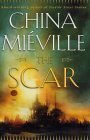
Review: The Scar by China Miéville

Miéville is one of most important voices in SF – period. His dark, gritty writing captures the reader, sucking them into his imagined world. The writing is intelligent and poignant, without becoming preachy – a fine line Miéville easily negotiates without being obvious to the reader.

The Scar takes places in Bas-Lag, Miéville’s fascinating and macabre world. The first novel set in Bas-Lag is Perdido Street Station, which is set in the massive, alien, yet familiar city of New Crobuzon. The Scar is set shortly after, yet we never see the streets of New Crobuzon. The Scar completely stands on its own, and is only tangentially related to Perdido Street Station. His third Bas-Lag novel, The Iron Council, returns to New Crobuzon some years later, and again stands alone.

The Scar follows Bellis, an intelligent and jaded women forced to flee New Crobuzon due to unfortunate coincidences and a military inquiry. On the journey to a distant colony, her ship is attacked and Bellis and the surviving passengers are forced to become citizens of Armada, a giant floating city of pirates. Fellow passenger Simon Fench has important knowledge that he must get to New Crobuzon, and he enlists Bellis to help. Bellis finds herself in the middle of the secret ambitions of the Armada and their plan to attain unequalled power.

Miéville’s world is a menagerie of personality and species. His world contains countless sentient beings, of which we see mosquito ‘people’, sentient cacti, sentient insects, aquatic species, vampires, and more. The setting is masterfully created, and not overdone in places as it was in Perdido Street Station. The Scar is the story of political ambition, the power of the people, manipulation, illusion, and of scars.

Miéville hits his stride in The Scar. The novel has almost none of the weaknesses of Perdido Street Station (not to imply that PSS is anything less than a superior novel and a classic). While the story is not quite as well constructed, it remains addictive. On my 10-point classification, where 5 is a take-it or leave-it novel and 10 is unsurpassed, The Scar ranks an 8 – Miéville is a must read for serious fans of the genre, and should be read outside of it.

Related Reviews: King Rat

Thursday, February 09, 2006

Review: King Rat by China Miéville

King Rat is Miéville's first novel. It is set in a late-90s London (not in fictional New Crobuzon like his other novels - Perdido Street Station, The Scar, and Iron Council). The imagery and language is dark and gritty, as I've come to expect from Miéville. The use of London street slang can be a bit difficult to understand for us 'Americans', but in the end context creates understanding and it adds to the atmosphere of the book. Right beside the coarse slang of the streets of London is the industrial music of late-90s, Jungle. Jungle plays a key role in the story and will especially appeal those familiar with the music and the Rave-type scene. Miéville is fantastic at creating the mood of a city through his descriptions. In King Rat I felt he gets it just right - in the other novel I've read by him (PSS) it seems a bit over done at times.


Upon returning to London, Saul is arrested and blamed for the death of a family member. Shortly after his arrest he is rescued from jail by a mysterious man calling himself King Rat. This man has inhuman strength and agility and smells of an animal - a very dirty and stinky animal. Saul has much to learn from King Rat - about himself and the world as he has never seen it.

In this new world, Saul learns of The Piper - the same Piper from the fairy tale that rids Hamlin of rats and ultimately its children. The Piper can play his tune to the entire world's species, he is in town, and he wants both Saul and King Rat dead.

The story is well told, if not as engrossing as Perdido Street Station. At times you can taste the world of Saul and King Rat - and you wish you couldn't. Overall it is a good read, though I hesitate to call it a great read. On a 10-scale, where 10 is unsurpassed and 5 is a take-it or leave-it book, I score King Rat at 6.5. In comparison, I'd probably score Perdido Street Station at 8.5 or even 9.

Related Reviews: The Scar

LinkWithin

Related Posts Plugin for WordPress, Blogger...