Showing posts with label debate. Show all posts

Thursday, April 01, 2010

Literary Mash-Ups: What do You Think?

Last year Pride and Prejudice and Zombies (Book Depository, Powell’s Books, Indiebound) by Jane Austen and Seth Grahame-Smith hit the shelves and became an instant success. Due to the copyright being long expired and other legal complexities that basically don’t apply to a work of fiction so old, the text to Pride and Prejudice by Jane Austen (Book Depository, Powell’s Books, Indiebound) is essentially open to whatever use someone dreams up now. So, the original text is intermingled with new text from Grahame-Smith to change a classic Victorian Romance into a zombie apocalypse.

Part of me rejoices – I mean it just sounds so fun. Another part of me wonders if it’s really just an unoriginal hack job on a literary masterpiece. Is this something new and equally creative as any wholly original work? Is this a next evolution of literature? Is it a gimmick? Is this the new tie-fiction ghetto? Is this a way to get more people reading? Did that absurd high-school reading assignment just get a bit cooler? A clever idea taken way, way too far? I haven’t made up my mind on this and in all honesty, I haven’t yet read any of these new mash-ups. But I want to hear what others think on this. And should I start reading one?

Of course the success of Pride and Prejudice and Zombies has bread faster than rabbits on Viagra. The prequel, Pride and Prejudice and Zombies: Dawn of the Dreadfuls by
Steve Hockensmith (Book Depository, Powell’s Books, Indiebound) is out now and there other springing up like those listed below. Heck, we’ve even got one coming where a vampire Jane Austen is a bit pissed off by what people have done with her fiction and get revenge – no joke, for real – in Jane Bites Back by Michael Thomas Ford (Book Depository, Powell’s Books, Indiebound).

  • Sense and Sensibility and Sea Monsters by Jane Austen and Ben H. Winters (Book Depository, Powell’s Books, Indiebound)

  • Android Karenina by Leo Tolstoy and Ben H. Winters (Book Depository, Powell’s Books, Indiebound)

  • Abraham Lincoln: Vampire Slayer by Seth Graham-Smith (Book Depository, Powell’s Books, Indiebound)


  • Queen Victoria: Demon Slayer by A.E. Moorat (Book Depository, Powell’s Books, Indiebound)

  • Mansfield Park and Mummies by Jane Austen and Vera Nazarian (Book Depository, Powell’s Books, Indiebound)

  • Emma and the Werewolves by Jane Austen and Adam Rann (Book Depository, Powell’s Books, Indiebound)


  • Adventures of Huckleberry Flinn and Zombie Jim by Mark Twain and W. Bill Czolgosz (Book Depository, Powell’s Books, Indiebound)

  • Alice in Zombieland by Lewis Carroll and Nickolas Cook (Book Depository, Powell’s Books, Indiebound)

  • Robin Hood and Friar Tuck: Zombie Killers by Paul A. Freeman (Book Depository, Powell’s Books, Indiebound)

  • War of the Worlds: Plus Blood, Guts, and Zombies by H.G. Wells and Eric S. Brown (Book Depository, Powell’s Books, Indiebound)

  • and many more.

    • Thoughts?

      Sunday, December 27, 2009

      On Reviewing…Take 1,764 and Counting

      So, after a Twitter exchange between me, Mark Charan Newton, Neil, Aidan, and Gav, Mark has written something up on what he as an author would like to see out of review blogs and ultimately names three that he thinks best meet what he’s looking for. As with all articles of that get introspective on review blogging, bloggers have come out in force to add their two cents (and their defense). Response posts are starting to pop up – it seems that all of us must have some clever response (if this were a movie, insert awkward pause where I turn and look at the camera).

      In general, I’m in agreement with what Mark says – he makes good points and gives advice that review bloggers should take to heart. However, his author perspective does come through, which does miss the point on review blogs are. I think very few review bloggers are blogging for authors – they are generally blogging for themselves and fans like them. Mark’s points are still valid and helpful, but should be taken into context.

      So, I’ve taken his seven points and given my response to them.

      1) There are bloggers who use the right tools, and those who are tools. If you’re expecting page-turning romances, don’t read Gene Wolfe and complain that his books are not page-turning romances. They’re not designed to be, they never intend to be. Likewise, don’t approach an entertaining romp expecting philosophical ramblings if it isn’t meant to be one. I wouldn’t say ‘I don’t like beer on account that it’s not whiskey,’ would I? This is not a valid complaint to make – it’s stating the bloody obvious, wrapping it up as your main concern. Judge a book on what it is, and don’t project your hefty genre preferences upon it.
      Hmm…it is a good point, but I think that Mark is missing the reason that many (well at least me anyway) bloggers get into this in the first place – we are fans. I can’t speak for all bloggers, just me – as a fan this makes the reviews I write a bit different from someone who is a ‘professional’ reviewer. I’m not objective, nor do attempt to be. First, I think objectivity is a myth – an undesirable myth at that. I’m opinionated – that’s why I do this. I want to present these opinions and all my biases right out in front. I don’t have the pedigree to even attempt critical objectivity, so I don’t try. Heck, I don’t want objectivity, I want a well thought out and presented opinion, with all its inherent strengths and weaknesses.

      To get back to Mark’s point – if I as a reviewer I read what is an excellent philosophical and stylistic force of fantasy literature and I am bored to death by it, then I’m going to write a negative review that complains about how bored I was. Likewise if I read a crazy romp that’s nonstop action and seems like little more than a bad video game turned into a novel, then I’ll complain about that too. I’m going to write about my reaction to the book, not reproduce how the writer wanted me to react to the book.

      I’m not surprised that Mark’s take is what it is – after all, he’s a writer and has certain reactions that he wants impart on an ideal reader. He has layer upon layer of meaning wrapped up into his text and he hopes the reader sees this. I’m not an ideal reader, I simply am what I am. Maybe I’ll get it, maybe I won’t. Heck, maybe I’ll see something incredibly clever that he never actually intended but is there none the less. But the reaction is mine, and I will report it as it is.

      Also, I do know what I like so I do read a certain kind of books. But I also like to take the occasional chance and challenge myself. Sometimes I’m rewarded by this with a book that I enjoy immensely. Sometimes I’m bored to tears. But I’m not going to stop taking those chances simply because I may get a Gene Wolfe when I’m looking for a Scott Lynch (or vice versa).

      So, I guess I’m a beer-lover who respects his whiskey, but just may think that Macallan 12-year scotch just isn’t any good. At the same time, I may think that Hefeweizen beer sucks balls.

      2) Slow and steady. An offshoot of the previous paragraph: slow books aren’t bad books. Get over it. And fast books can be intellectual too. Don’t make the pace mistake.
      Please, please add the caveat. Sure, slow books aren’t necessarily bad books. But they can be. Also, some people simply don’t like slow books – and their opinion on the matter isn’t any less valid just because someone thinks the opposite. Opinions vary. Yes, I understand the point that Mark is making, but it is incomplete and awfully unfair to the plethora of valid opinions out there.

      3) Prose & style. I’ve mentioned this before, but it needs flagging again. When people read a novel, and say that the ‘writing improved’ or the ’second half was better written’, there’s a good chance they mean that they themselves had become used to the different style in which the book was written. The prose doesn’t necessarily change – the reader’s interaction probably does. And words are just there, on the paper, so if you think they’re bad, explain why.
      I’m not surprised that the author is quick to blame the reader on this point. Yes, readers often don’t realize that they can learn to appreciate something they are unfamiliar with, but sometimes books simply begin badly. As always, there’s a spectrum and the ‘truth’ rarely falls at one extreme or the other, but somewhere in the middle.

      On the last bit, I agree – opinions should be backed up. This doesn’t necessarily mean a 2000-word review full of quotes and detailed analysis. But even a short explanation is much better than none.

      4) The synopsis should remain on the back of the book. Please, don’t just describe the back of the book – that’s cleverly constructed marketing blurb, which has a secondary aim of making reviewers say what publishers want, and pushing all the right buttons. By all means give the blurb, but don’t make it the whole of your review. It’s lazy, and you’re then merely giving a reach-around to publishers. I certainly won’t link to it. Have your own opinion, write about what you got from the book.
      I have no issues on this one – Mark is dead on.

      5) Reviewers who are also writers (of the unpublished variety). It’s hard to tell, with some bloggers, just who is a struggling writer and who isn’t. It isn’t bad at all if you are, so you might as well be open about it. One of the things I got used to very quickly as an editor was not to approach a book with my own writing style in mind. So don’t read a book and criticize it by thinking, ‘If I wrote this, I would have done x, y, z differently’; or ‘The style isn’t like my own, so I don’t like the book.’ You’re not doing anyone any favors, least of all the writer, and it’s a tough realization to make. You write, you think you could do better, of course. But be careful if this mindset takes over.
      I can’t really comment on this one – I have no aspirations to be a writer.

      6) You can’t love every novel. Loving everything diminishes the power of what you say. There is no way of possibly knowing what is good or bad if you recommend everything. Do not feel pressured to do so by publishers – remember, by reviewing, you’re doing them a favor. And if as a writer I come across your review of my book, I’m not likely to think a lot of it if you’ve loved every single book out there. We’re egoists! We want to feel special.
      This is potentially in conflict with suggestion No. 1. But, I agree – negative opinions are important and valid and should be shared as loudly as positive (but don’t be an ass about it). Of course, as I mentioned in my response to No. 1, many bloggers are fans and they tend to read and review books that they are pretty certain they are going to like (not many people set out to read a book they think they won’t like). This will generally skew a blogger’s reviews toward the positive, and there is nothing wrong with that.

      7) Edit thyself. One thing that reviews don’t always receive on blogs is a thorough unbiased edit. So, once you type, put it down, revisit, rework, and spell-check. You’ll get a lot more respect if your review isn’t riddled with obvious errors.
      Absolutely! The few times I have had an independent edit of a review I’ve written (
      such as this one) it is eye-opening and ultimately makes the review stronger. My general rule is to write out a complete draft and let it sit at least a day before coming back to it with a clean mind. Admittedly, I break this rule almost as often as I follow it – but better editing and such can only make reviews better.

      Of course, blogger generally are amateurs who are doing this a hobby rather than a vocation. Time is limited – if you work, have a family and a social life, fitting in reading alone can be a challenge, not to mention the time to write the reviews. So, if an ‘and’ remains an ‘an’, I’m willing to cut some slack, however annoying it can be.

      Tuesday, July 08, 2008

      It’s Official – All SFF Awards Are Useless

      Ok, the title is a bit dramatic, but all SFF awards should be viewed with heavy skepticism. The Locus Awards were just released – these were the only major SFF award that anyone could vote for – as close to a true popular award as you could get in the SFF world. Well Neil Clark and Niall Harrison have voiced some very justified complaints about rule changes that were made by Locus after the votes were submitted. Apparently, subscribers to Locus are so much more important than the rest of us that their votes get to count twice. Yep, a subscriber’s opinion is worth double that of a non-subscriber.

      So, the Locus Awards now join the ranks of the Nebulas and Hugos as awards that have results skewed enough to make them rather meaningless. The Nebulas have become little more than a popularity contest among writers with nominating rules that could confuse rocket scientists (but would probably make sense to the IRS). The Hugos have become a joke with such a small percentage of members of a club with membership fees actually voting that I have no idea who is deciding things. My feeling is that the results are heavily skewed by authors, editors, and over-weight, Baby Boomer trekkies that are most comfortable at home in a basement speaking Klingon.

      The World Fantasy Award is at least transparent in that it’s a juried award whose judges are known. Perhaps this leaves the annual poll of the SF Site as one of the best judges of what may actually be award worthy with both an editor poll and reader poll.

      Anyway, the bottom line is that I don’t take SFF awards very seriously and I’d recommend that others at least be skeptical.

      Caveat Emptor!

      Monday, February 25, 2008

      But Where Are They?

      While I was looking over other blogger reviews of Before They Are Hanged by Joe Abercrombie in preparation for writing my review I noticed that several that literally plead (if not threaten) for maps. Then this discussion pops up over at Westeros and there is this blog post where Joe Abercrombie discusses his feelings on maps.

      There is a long tradition of accompaniment maps in fantasy novels, and as a whole, I have to admit to a love of those maps. Now, I’m a geologist by trade and a very visual-spatial person, so this is no surprise. Before I could even read words, a book of maps could keep me occupied for hours and little has changed in the decades since. So, while I love maps, I feel that no fantasy book needs them – and if one does, that book is fundamentally flawed.

      I’ll happily admit to flipping often to maps of continents, countries, and cities when reading the likes of Tolkien, Jordan, Martin and Erikson. I’ll also admit to craving a map when reading someone like Pratchett (whose take on maps I fully support) and to finding maps both useless and pointless (see Scott Lynch’s books). But, I have to say, particularly in the case of Joe Abercrombie’s The First Law trilogy, readers who are demanding a map, seem to be missing the point.

      As Joe indicates in his discussion of maps, they can be distracting and take away from the direction the reader should be looking in. It doesn’t matter where they are – Logen Ninefingers doesn’t have map – the point is who they are and what they are doing. Abercrombie’s efforts are to focus on the characters – not the big picture. Rather than taking the larger, world-view, he is intent on showing a few people caught up in it all. To be worrying about where the characters are physically located in relation to each other and the rest of the world is really missing the point.

      I’ll continue to love maps and I’ll continue to love books with and without maps. I’ll loathe the first book I read that depends on its map and I’d happily enjoy an Abercrombie book with a map. But let’s not loose the focus – a map is just an extra that may actually be a hindrance – it’s the words that matter.

      Now, what are your thoughts on maps?

      Tuesday, August 28, 2007

      Speculative Fiction has “Eyes Wide Open”

      Gabriel Morgan has written this interesting column for the New Observer.

      …unless you count yourself an admirer of fantasy, science fiction or horror, chances are you've glanced over at the "genre" section of your favorite bookstore and asked yourself, "My oh my -- what's going on over there?"

      And I'm here to tell you:

      Everything is going on over there…

      Describe a subgenre of mimetic fiction, and there are speculative authors doing similar work. Do you prefer fiction that is heavily character-centered? Fiction that explores the human condition, that asks the big questions? Fiction that displays a sense of history, that draws connections between important things? How about fiction that explores what it means to be an American in the 21st century? Speculative authors are writing about all of these things. They, like Pablo Picasso, have every single one of the tools that a "naturalist" (read: mimeticist) has to work with; but they, like Picasso, also have the freedom to abandon the appearance of reality when it suits their vision.


      Read the whole column, it’s equally as interesting – and the best part is that more is promised to come.

      Via Lou Anders
      EDIT: I should have waited another 20 minutes before posting this. Contrast the above with this article by Jonathan McCalmont. I think there are some good points to had, but my initial reaction was to count the number of ways I disagree.

      Tuesday, July 31, 2007

      Race in SFF

      I’m always interested when a major newspaper or other media outlet talks about SFF because it just doesn’t seem to happen all that often. Today the Boston Globe ran this article by Vanessa E. Jones about race in SFF – mainly concentrating on the scarcity of black authors in the genre. It seems likely this was inspired by the monochrome appearance of the attendees at the recent Readercon.

      The article itself is a pretty good one, if being rather predictable. SFF does have too few non-white authors and there are subtle race, gender, sexual orientation, and other stereotypes are too often intentionally and unintentionally perpetuated in SFF works of both the past and present. I’m not really knowledgeable enough to write in any kind of detail about this – and I’m not going to be the one to point to all the good stuff that SFF is producing in this area. Other (likely much more informed and intelligent) responses are popping up around the blogosphere (and here's an interesting entry that's a bit older but well worth reading). But, what really got to me is the focus of this article. You see apparently the race issues are limited to the black minority. There doesn’t seem to be any other racial minority worth talking about, at least the article doesn’t mention any. Anyone else a bit bothered by this bit of tunnel vision?

      Thursday, July 26, 2007

      Horse Buggies and Automobiles

      One of many observations I’ve made since I began blogging is the circular nature of so much of the discussion. A topic gets hot, is talked about endlessly, dies for a while, and is resurrected again to begin the whole process anew. One such topic (and one that seems to always inspire a reaction from me) is that on reviewing in general, and specifically the quality of on-line reviews and on-line versus print reviews. I most recently mentioned this only yesterday, but dig deep enough and you’ll fine a lot of discussion around the time preceding Scalpel’s ill-fated launch, and another round some months prior, etc. Each of these incarnations may have a slightly different focus, but it all seems to be part of the same on-going discussion.

      The latest entries in the newest round (which has been building in response to a panel at Readercon) are actually somewhat anomalous – these most interesting contributions seem to be voices of reason (at least from my admittedly biased view). Paul Kincaid dissects the argument that on-line and print reviews are fundamentally different, and then explains in detail what he feels makes a good review. Jonathan McCalmont follows up with a very good discussion on the quality of on-line reviews.

      Really, I shouldn’t even be jumping in here – I don’t write the type of reviews that these guys want. I’m not a critic and I don’t even pretend that I offer criticism – I just offer my opinion on books. I go into detail in this explanation on my reviews, but it really boils down to me wanting to write a review for the average fan, a review that I would want to read. I’ve always just wanted a short idea of what the book is about (i.e. short plot summary), some commentary that says what’s good and/or bad about the book, and what makes it so. The ideal review length for me tends to be in the 600-900 word range. I do love the longer, in-depth reviews/criticisms, but not until after I’ve read the book.

      From many discussions that I’ve had on various message boards and blogs, I found that there is a real demand for this type of review (as can be seen by the relative success of this blog and those like it). The more academic-minded reviewers out there chafe at this, but as I see it, it’s a simple fact. A large audience is really craving this, and there are a number people like me who provide. That doesn’t mean that there’s not audience for longer, more ‘professional’ type reviews – a street-level criticism to bring up a term that’s been bandied about. Of course there is – there’s room for all of us, and this is a point that is so often overlooked, especially when extreme, or at least narrowly focused opinions tend to get all the attention. However, one thing that will continue to annoy me (well piss me off may be more correct here) is the derogatory elitism and disdain shown to those like me by some out there (particularly old-school print reviewers).

      Before I ramble on too far, I think I’ll sign off until the next time this all comes around…

      On a side note – Jonathan McCalmont is looking to keep the idea behind Scalpel alive with a new (Gabe-free) project. My reaction: Excellent!

      Friday, July 13, 2007

      The Scourge of The

      I’m sure that I can’t be the only person who’s noticed just how often a book title begins with the word ‘The’. Am I the only one who is annoyed by this? To be completely honest, anytime I see ‘The’ as the first word in a title, I’ve already mentally marked the book down a bit. Now I can’t ever recall having not bought a book due to this, but I’ve come to realize that titles are among the most important aspects of me choosing a book, and it bugs me. To me, it just seems somewhat lazy when ‘The’ is the first word – I’m sure this is an overgeneralization, but it does represent my gut feel.

      I took a quick look to see just how prevalent it is – I’ve posted a total of 68 book reviews since starting this blog about a year and half ago. Of those books, 28 start with ‘The’ – that’s over 40% of the titles starting with the same unoriginal word. I didn’t bother to count up how many tags/labels I’ve attached to various posts, but 39 of them start with ‘The’, and most are book or series titles.

      What does this mean – well, I suggest that if a writer or editor is looking to come up with a good title that’s more likely to grab the attention of someone like myself – avoid the scourge of ‘The’. Really, put just a bit more thought into it and the title will benefit.

      Am I alone here? Thoughts? Any comments from someone who has actually had to come up with at title?

      *I’m particularly proud of the fact that I used ‘The’ to start the title of this blog post.
      **The was utilized 20 times in the writing of this post.

      Monday, July 09, 2007

      A Report from Readercon 18

      Matt Denault has written up a spectacular report on Readercon 18 for FantasyBookSpot. I highly recommend reading it as some real interesting things were discussed.


      Ok, so I’m going to focus on something that actually applies directly to me and rant a bit – the panel discussion title “Reviewing in the Blogosphere” with John Clute, Kathryn Cramer, Jim Freund (M), Ernest Lilley, Tom Purdom, and Gordon Van Gelder. So, the first observation is that I don’t believe any of these people actually qualify to be on a panel titled “Reviewing in the Blogosphere” – these people are certainly qualified to talk about reviewing, but they review for publications and such. Ideally, this panel should been populated by half with some amateur blogger reviewers or message board reviewers – essentially someone that’s never received a paycheck for a review.

      As a result, it seems that the discussion quickly turned into “Reviewing On-line” and the challenges that the Ivory Tower have faced as they transition from print to screen rather than anything about blogs. This was not a discussion about reviewing on blogs, but the same discussion on reviews that continues to occur with these Ivory Tower reviewers who disdain the likes of me. Matt sums up some of Clute’s responses:

      Clute responded that these plot summaries plus reviewer opinion are not really reviews. Asked what a review should do, Clute replied that it should be just like any other piece of writing any writer might produce, something that deploys all the skills she or he can muster, that they are proud of, and that they can envision still being in-print (and still being proud of) 10 years from now.

      I can agree with much of this – a plot summary is the worst kind of review. A plot summary plus opinion can be just as useless. Many blogger reviewers do suffer from either a ‘laziness’ or perceived need to get something out quickly – this certainly applies to myself at times. Putting some true time and thought into a review is important.

      However, the latter part of the summation above is where I start to disagree. John Clute writes detailed critique-style reviews. This is not something that should always be strived for. A quick review like what I write here is often all that is needed or wanted. I write reviews the way I do because they are the type of reviews I want to read. I want a quick idea of what the basic plot is and a basic idea of what is good and bad about the book. For this to be too meaningful, I need to have some knowledge and trust of the reviewer. I really don’t look for the more detailed review-critique until after I’ve read a book.

      Clute seems to stop short of implying that everyone writing reviews should write as he does – but does imply that it’s not a place for amateurs. I’ve been annoyed by ‘Clute-worship’ in the past and it still annoys me now. This isn’t because of anything that Clute does – I actually believe that he deserves all the attention and praise that he gets. But there is often this idea that if you don’t strive to write a review like Clute does, that you just shouldn’t bother at all. That’s what I don’t like.

      Ok, so back from the tangent – I would have loved to read a nice summary on “Reviewing in the Blogosphere” – instead they presented an Ivory Tower perspective of reviewing on-line. That’s too bad.

      Oh, and let’s not forget that I’m commenting on a second-hand account of it all – I could easily be way off base.

      Matt – great reporting. I hope FBS sends you to all the cons.

      Wednesday, June 27, 2007

      Just How Much Do You Like Author Blogs?

      I have to say that I love author blogs - I like the greater connection that I feel when I read there thoughts on whatever they choose to blog. I like that I can interact directly with them in a way that simply wasn't possible even a few years ago. I think it's good for the author in a business sense as well. And I also think that many, many people also like author blogs.

      But, what do you feel about the potential for unintended consequences? How do you feel about it be written into contracts that authors must blog __ amount of posts per __ amount of time? Does that make you feel uncomfortable? (I sure do) Well, this is exactly what seems to be happening.

      This is news to me (but not entirely suprising) and I found out from a reference on
      Orbit's own blog. A new author of theirs (Jeff Somers) has started to meet his contractual requirement by blogging - and it's quite entertaining. Here's the blog where he talks about being required to blog - it sounds awefully tongue-in-cheek, but there is also some real bitterness there.


      Thoughts?


      PS - Also, what are the implications of even clicking on the link to the blog? Seems to reinforce the requirement to me? Isn't life simple?

      PSS - I've read a bit of his blog - it's hilarious, really you should go and read many of the entries. And now I want to read his book - see I'm a sheep now.

      PSS - Of course I really wonder if he's contractually obligated or not. It's certainly an entertaining way to frame his blog - maybe I'm not a sheep, perhaps a goat.

      Sunday, June 03, 2007

      Ray Bradbury on Fahrenheit 451


      This article in LA Weekly talks with Ray Bradbury and he has interesting thing to say about what Fahrenheit 451 is really about. Instead of it being about government censorship (which is what pretty much everyone believes), Bradbury say it’s really all about TV and how it destroys interest in literature.

      I find this very interesting on two very different trains of thought. First, I have to say that I think he’s dead-on. In general terms, TV does destroy interest in literature – in fact, I think that in general TV destroys thought. I’ve ranted before about TV and movies being a passive activity versus the active activity that reading is – I believe very strongly this to be the case. Now, sure I watch my fair share of TV, but I do prefer reading. So, in this respect, I’d say that Bradbury’s intent with Fahrenheit 451 hit the mark in perhaps even a more relevant and scary way that the usual interpretation of censorship.

      I also can’t help but feel that Bradbury is wrong – Fahrenheit 451 is clearly about censorship and to say otherwise is a mistake. In many ways a book is not about what the author thinks it is – it’s about what the reader thinks it is. Once something is written and published, the author is no longer in control in terms of interpretation of that book – it’s now all in the hands of the readers. So, if almost everyone who reads Fahrenheit 451 believes it to be about censorship, then it is about censorship – regardless of what Bradbury says or believes.

      Anyway, my intent isn’t to on and on in some essay form here, but just to express my thoughts on an interesting article and piece of news. If you haven’t read Fahrenheit 451, you need to – it’s more relevant now than ever however you choose to interpret it. If you haven’t read in your adult life, it’s time to revisit this true classic of science fiction literature.

      Friday, April 27, 2007

      Cover Art Rumblings

      On the cover art front, it seems that the Agony Column has similar feelings as I do. I haven’t talked about The Name of the Wind cover art, but I essentially agree with the article – though I’d like to point out that there isn’t a sword on that cover, but a lute. Over at the Science Fiction Book Club they don’t seem to agree.

      It’s nice to see that I’m not alone out there in my feelings about cover art.

      Wednesday, April 04, 2007

      Interesting Discussion on Differences

      Over at the OF Blog of the Fallen, Freebird/Dylanfanatic/Larry has posted an interesting blog about differences (such as gender, race, ethnicity, sexual orientation, etc.) of authors and readers. I comment at length there and don’t really have the energy to rehash and update it.

      So, do you have gender preferences in your reading? How about other cultural preferences? It is my belief that this is the case to some degree or another for all of us – which is not (necessarily) a bad thing. I also believe in the value of challenging one’s self from time to time. For those of us that are part of the English as our only language, Western culture, when is the last time you read a book that was translated from some other language?

      Anyway, comments and discussion is certainly encouraged.

      Monday, March 26, 2007

      A Tale of Two Covers – Gardens of the Moon


      In this installment of my irregular series of cover art discussion I discuss two different covers of the same book: Gardens of the Moon by Steven Erikson One is the UK version and the other a US version. To muddy the waters even more – it’s not a black and white discussion. I don’t particularly like either cover – it truly is a gray area here (which is rather appropriate since it is a Steven Erikson book’s cover I’m discussing).


      Chris Moore is the artist who produced the UK version (above) of the cover art for Gardens of the Moon. I definitely file this cover in the ‘traditional fantasy’ section with a nice castle in the background and some wizardly dude in the foreground holding a sword with lightening flashing from it. All in all, it’s quite cheesy, though it doesn’t quite achieve the point of me being embarrassed to be seen reading the book.

      Really there isn’t too much for me to say beyond it being traditional fantasy cover (thankfully it is dragon-free). It has almost nothing to do with the actual content of the book as far as I can tell. It’s just there.


      Stephen Youll is the artist behind the US version (above). This cover is almost universally despised as far I can tell. In some ways that puzzling, and others it’s quite clear why. Looking at the big, detailed version, I have to say that the artwork really is spectacular – particularly the background. The dark red background appropriately sets the mood for the book.

      Of course the problem is the people on the cover. These two look to be taken from a harlequin romance cover and dressed in armor (isn’t cleavage a nice, practical touch for armor?). While the backdrop is nice, these people make for a truly embarrassing cover – I certainly wouldn’t want to be seen reading a book with this cover. The only positive about the people is that the woman isn’t worshiping the man – though she is still placed in a lower, subservient position. For the paperback version (below) they markedly improved the cover by omitting the woman, though the cover remains quite bad as they left the man.


      Again, I can’t see any real relation to the actual plot of the book. As I mentioned above, at least the dark red color appropriately captures the mood.

      So, what’s the conclusion – in my opinion, they both suck as cover art. However, the nod certainly goes to the UK version (as it usually seems to) for not being utterly embarrassing to be seen with*.


      *No, I’m not overly concerned about my appearance to others or what they think of me or my reading tastes. But that does not remove the shame of being associated with truly bad cover art.

      Friday, March 02, 2007

      Cover Art - an Article and a Plea

      Laura Resnick has posted this 5-part article about cover art that was originally published around 10 years ago. It is a fascinating and troubling look into cover art and its importance to a writer’s success. A writer’s career can be made or unmade by cover art, and they have very little control over it – of course do they have any true understanding of the market and how it works?

      As interesting as it is, I have to think that this article is out of date. As I say here, cover art has almost no impact on my buying a book (the title is probably most important to gaining my initial interest). Either I’m very rare, or I reflect a new trend in the market. This is the world of the internet, on-line buying, blogs, endless reviews of books easily accessible with a computer, and fewer and fewer actual book stores (and it seems that more often they actively hide everything but the best sellers).

      I believe that publishers, art directors, and marketers need to give us readers a bit more credit when it comes to cover art, and realize that to us end purchasers – the cover may actually be the last thing we see when we choose to buy a book. The buyers for the big bookstore chains need to get with the times as well – STOP JUDGING BOOKS BY THEIR COVERS! The out-dated model of reliance on cover art may be a reason for declining sales of books (among others of course). Work on a good title, a good jacket description, get the book out for reviews in traditional and non-traditional sources, and good cover art – but remember, in an on-line world, it’s the words that matter.

      It’s a whole new world out there and I believe its past time for some evolution here…

      …but what do I know, I’m just a guy who buys a lot of books.

      Thursday, March 01, 2007

      Teacups, Aesthetics and Fat

      Well, a couple weeks ago I jumped into this on-going debate. I pretty much stopped following it since I said what I had to say, but it has morphed a bit with this blog by Hal Duncan (even Scott Bakker came out of hiding to comment about this one), followed by this two-part take on the issue by Jonathan McCalmont. Hal has followed up once again.

      It’s all very interesting (though I recommend getting very comfortable and arranging for your next three meals before attempting to read a Hal Duncan blog post – a funny look at this here); however, I don’t have anything more to add – it’s all just works, and my eyes go blurry trying to follow it right now.

      Wednesday, February 28, 2007

      A Tale of Two Covers

      An earlier post about some of the cover art that I like and dislike generated some interesting discussion, leading to this post. I may make this a regular ‘series’ where I compare cover art that I like with what I dislike. Now, I’m even less valid as an art critic than a written word critic, so keep in mind that this is just my opinion. I’ve had no relevant training, so actual artistic technique and form won’t be a big influence on me. This is all what I think about the cover art – how I react and any emotional response that it evokes. It's about how this particular cover art works as art for the book it's attached to.

      For my first go at this I’m going to compare the cover art of two books by the same artist – Michael Whelan. Both of these are what I would consider to be a traditional (epic) fantasy cover art, which I generally dislike. One works for me, one, doesn’t.


      Starting out with the bad – the first offense and most noticeable aspect of this cover are the two characters to the left. Both are looking whimsically off into the distance, with the woman almost (but not quite) pining for the man. It would be much worse if the woman were actually in some sort of worship of the man, but it is still implied. Ugh! This is about the worst offense fantasy cover art makes – it’s belittling to women and insulting to the tastes of readers. Does the woman really have to be seen in such a subservient, worshipful way? It really does make me nauseous. At least she is fully clothed, though it’s only a small victory.

      The rest of the cover is a bit to ‘pastel’ for my taste – I prefer dark, earthy colors when it comes to landscapes rather than pastels.

      As for how matches the mood of the book itself – I’d call this rather pedestrian in that respect. It doesn’t directly contradict anything, though it hardly represents a scene from the book and doesn’t capture the mood – by this time in the story, things were dark and cold with little hope. A cover showing two people essentially basking in glory is just inappropriate, regardless of how the story actually finishes. Finally, these two people don't even come remotely close to my mental image for Simon and Miriamele.


      This is an example of traditional fantasy cover that works. The central character is in a dark shadow, with his head slightly bowed. His stance indicates both a tense readiness and a heavy load – something along the lines of the weight of the world and his shoulders. The dress is perfect for this post-apocalyptic western feel and the dark, earthy colors reinforce it nicely. This is certainly the Roland we know – and I can here his perfect theme song in the background, Hurt as sung by Johnny Cash. The raven perched on skeletal remains and distant Dark Tower complete the cover. The mood is set and the cover even evokes an emotion actually related to the story – very well done.

      So, what are your thoughts? It’s all subjective – some of you are bound to agree, while some will surely feel I’ve committed the gravest of insults with my opinions. Should I continue with the ‘series’?

      Tuesday, February 06, 2007

      In Defense of Escapism

      Ahh…here is another one of those great internet discussions, spilling over from message boards to blogs about an issue that’s been discussed to death. This time it seems to have started with M. John Harrison posting this about the sin of worldbuilding, it was followed up with some message board discussion at wotmania and ASOIF. Then Larry/Dylanfanatic/Freebird posted this blog, Pat at Pat’s Fantasy Hotlist followed up with this entry with Gabe Chouinard responding here. And several others have weighed in as well.

      Fine, I’ve said what I have to say about worldbuilding elsewhere, so this is not really a direct response to any of that above, just an extension of my reaction to that discussion.

      For whatever reason, admitting that you read for any sort of escapism is akin to admitting you like country music, Nascar, Natural Lite beer, live in a trailer, etc. You are immediately regulated to being less intelligent of a reader and just not getting it. Suddenly, you are less than respectful.

      Well, I read for escapism – it may be the biggest reason why I enjoy reading as much as I do. It’s almost certainly the biggest reason why such a large proportion of my reading is in speculative fiction.

      Let’s face it – reality sucks a lot of the time. I spend 9, 10, sometimes 12+ hours, 5 days a week working. I like my job, but I won’t pretend that I’d keep working if I won the lottery. Beyond that, it’s hard not to take a cynical view of the world today – there’s terrorism, unnecessary war, an idiot running the most powerful country in the world, religious extremism, global warming, etc. If I allow it to sink in it’s hard to not get angry, depressed, and unhopeful. Then, when I get home it’s time to various chores and projects, and of course there are family relationships to deal with.

      So when I get some free time I absolutely want to escape this reality and fully immerse myself in some alternate world. I don’t need much; I just crave something that is different from my perspective, something that might require a suspension of belief. Speculative fiction of all sorts is where I most often turn to for this. This is what I enjoy; this is my hobby.

      Am I looking for cliché, epic fantasy that is pure escapism – usually not, but sometimes I am. I do enjoy books that contain depth – that are thematic, metaphorical, political, great statements on the human condition, etc. I also enjoy books that are just plain fun, while not being particularly deep. And yes, in almost all cases, escapism is still the biggest driving force behind my enjoyment of reading. Loosing myself in the story, the world, or the language – yes this is an escape.

      For whatever reason, it’s assumed that if you read for escapism, you must be reading some 10-book series of epic fantasy, something that is poorly written, easy for others to dismiss. I don’t get this – I can escape just as easily into something by Jeff VanderMeer, Haruki Murakami, Graham Joyce, or Hal Duncan. Escapism equating to bad writing is fallacy.

      Perhaps the issue starts in the way people define escapism differently from one another. Maybe people deny things in themselves and others. Maybe people are just different.

      People read for lots of reasons. Denying that escapism is one of the biggest is a mistake – it should be embraced. Looking down on anyone for their own reasons for reading is horribly short-sighted. Look, if escapism is an evil word to you – fine, just don’t tell me how wrong I am for embracing it. I can accept that you read for reasons different than my own; can you do the same?


      Edit: Gabe adds another post and Tobias Buckell jumps in (thanks for the link).

      Edit 2: Dylanfantic/Larry/Freebird reflects some more - some interesting ideas to think on, but ultimately I'm not sure he 'gets' it.

      Edit 3: I think I'll stop adding edits after this, but there is some great discussion on this happening at The Lotus Lyceum. Deep Genre offers something tangental to the issue, and The Lotus Lyceum discusses that also.

      Wednesday, October 18, 2006


      Endless Debate: Take…

      Well, Pat has gone and done it again with this post. It’ll be interesting to see if this results in anything new, or just more of the same.

      For giggles, a link to my previous post summarizing the latest round of debate of reviews and the internet.

      Monday, September 18, 2006

      On-Line Reviews – The Endless Debate

      Well Gabe Chouinard has brought up the rather common discussion/debate about the quality of on-line reviews versus true criticism of a book. This discussion has taken many forms that I’ve participated in the last few months, and Gabe has nothing to say I haven’t seen before. In fact, I agree with much of what he says, but defend myself by saying I’m not writing true critique here, nor do I want to. This post describes in more detail what I intend my reviews to be.

      So, for some fun reading here are a few discussions on reviews worth reading.

      EDIT: Rob Bedford at SFFWorld is brought into the discussion, Gabe reviews his review and then calls me out.

      EDIT2: It keeps going - Pat ways in at the Fantasy Hotlist and Gabe adds a bit more. I ask people at wotmania OF what they want in a review.

      EDIT3: Discussion at SFF World and Jay shows that he truly is The Bodhisattva.

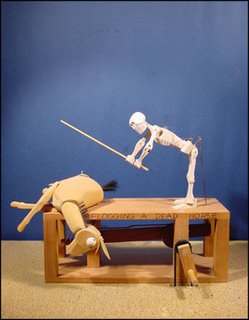
      EDIT4: Are we flogging a dead horse? Author Paul S. Kemp chimes in and some discussion at Fantasybookspot.

      EDIT 5: Probably my final edit since I'm leaving for a vacation in a day, but here are the latest add-ons:Jason Lundberg with a lengthy response, John McCalmont, and Chekhov's Mistress.

      FINAL EDIT (Oct. 18, 2006): In honor of Pat not letting go....

      LinkWithin

      Related Posts Plugin for WordPress, Blogger...