Showing posts with label noir. Show all posts

Friday, October 14, 2011

Review: The Edinburgh Dead by Brian Ruckley

The Edinburgh Dead by Brian Ruckley (Book Depository, Powell's Books, Indiebound) is a significant departure from the epic fantasy trilogy that brought Ruckley to the attention of fantasy fans. Set in 1828 Edinburgh, a historic detective tale morphs into something darker and more sinister as Ruckley brings 19th Century Edinburgh alive in his best work to date.

Adam Quire is a war-hardened veteran and an officer for the newly-formed Edinburgh police. A particularly gruesome death doesn’t add up and Quire’s investigation leads him into puzzling and dangerous ground that points to the pillars of Edinburgh society. And then it gets personal and Quire releases the talent he keeps at bay – a talent for survival and extreme violence.

The Edinburgh Dead is the first book by Ruckley that I’ve read since his debut Winterbirth (Book Depository, Powell's Books, Indiebound). I found Winterbirth to be on the mediocre side and haven’t been inspired to finish the trilogy (though I do plan to eventually). In The Edinburgh Dead I immediately noticed that Ruckley’s writing has improved significantly. His descriptions are powerful and set the mood well – early 19th Century Edinburgh comes alive through his words. We see the intellectual powerhouse that Edinburgh has become – we also see the dark underpinnings that props up that distinction. There is privilege and there is everyone else. Lives are hard and dangerous – and there is the ever present need for more bodies to dissect on the cities medical stages.

The Edinburgh Dead is a true blend of many genres into one coherent and very well told story. It’s historic fiction, it’s a hardboiled mystery bordering on noir, it’s gothic horror, and it’s an urban fantasy supernatural thriller. Often when such cross-over happens, one still dominates or the combination doesn’t quite fit as well as it should – with The Edinburgh Dead it’s seamless – a natural blend.

The real strength of The Edinburgh Dead is the setting and the way in which Ruckley draws the reader into the dark and dangerous streets of Old Town. Edinburgh comes to life through the broken, beaten and resourceful Quire, a sinister life beneath the glamour of enlightenment. The relatively slow and steady pace continually builds towards the end – a perfect balance that resists the urge to rush. The only real fault is that Ruckley at time over-indulges with his descriptions, particularly in the latter half of the book where the mood has already been set.

The Edinburgh Dead is told mostly from the point of view of Quire and his personality dominates the book. This both good and bad – Quire is a powerful personality and vividly reflective of Ruckley’s 19th Century Edinburgh, however there are a few minor characters who could have been brought out more. If the book had been told entirely from Quire’s point of view, this flaw would have been less noticeable, but increasingly as the novel moves forward we see bits and pieces from other points of view to fill in the blanks of the evolving mystery.

All in all The Edinburgh Dead was refreshing change of pace from Ruckley and a very good historical gothic mystery horror urban supernatural thriller. I hope that Ruckley continues in this direction with more surprises to come.

Friday, August 12, 2011

Review: The Urban Fantasy Anthology Edited by Peter S. Beagle & Joe R. Lansdale


The Urban Fantasy Anthology (Book Depository, Powell’s Books, Indiebound) is edited by two powerhouses in genre and beyond – Peter S. Beagle and Joe R. Lansdale. They have amassed 19 previously published stories, 1 original story and 4 non-fiction essays that attempt to capture what the genre of urban fantasy really is. The result end up being more of a highlight of the identity crisis of urban fantasy rather than a clarification, while providing some interesting and fun reading.

As I discuss the details of the anthology below, I give my thoughts and reactions in the order the material is produced in the anthology. The resulting review ranges from short reviews of individual stories, to reactions to the essays, and ends up being nearly an essay of its own.

Introduction. Beagle writes a good and informative introduction to anthology that I largely find myself agreeing with. He outlines the evolution of urban fantasy from its beginnings, with a general evolution from what this anthology categorizes as mythic fiction to paranormal romance and finally to noir fantasy. Beagle spends a good bit of time discussing Buffy the Vampire Slayer and essentially credits it with the creation of paranormal romance and the shift away from mythic fiction in urban fantasy. A quick look at the original copyright dates for the stories in the anthology reveals how this is an over simplicity – the earliest paranormal romance story was first published in 1989, predating Buffy. The oldest story included is actually from the noir fantasy section (which is presented as the final evolution of urban fantasy in this introduction) and was first published in 1983. This introduction presents a rather simplistic evolution of urban fantasy, the dates alone show that things evolved on their own and at different times, with their popularity ebbing and waning on yet another timescale. Not that I really thing Beagle would disagree with this, it’s just that he oversimplifies things a bit to get his point across.

Mythic Fiction

“A Personal Journey into Mythic Fiction” an introduction to mythic fiction by Charles de Lint (2011). De Lint presents a very personal journey of his becoming a writer and developing his style, which if you’ve read de Lint before is easily recognizable. His reflections quickly reminded of me why this is sort of urban fantasy I tend to enjoy the most.

“…the biggest difference is that mythic fiction has room for a story to be told at a slower pace. The preternatural elements are present, not only for their coolness factor (werewolves and witches and vampires, oh my!), but because fairy tales and mythology tap into a deeper part of the psyche than an adventure story can reach.”
“A Bird that Whistles” by Emma Bull (1989). This story very quickly reminded me of why I love mythic fiction so much. A young musician is taught by a fae, while he just may have taught the fae a thing or two. This is a pleasant and easy to read story with more depth than readily apparent. When it ended I was sad – I really wanted to know more.

“Make a Joyful Noise” by Charles de Lint (2005). While I wouldn’t place this among de Lint’s best work, it was a very pleasant reminder of how much of love his writing. This story of a couple of corvid (crow) immortals amuse themselves by helping out a ghost is at once melancholy and irreverent.

“The Goldfish Pool and Other Stories” by Neil Gaiman (1996). I had a huge sense of déjà vu while reading this story – whether real or not, this is that sort of story.* It’s a story about Hollywood – as much about the past as it is about the current. I love that the editors include this in mythic fiction to highlight a belief that all myths aren’t all ancient. The contemporary world is creating myths all its own and the recent past has as well. It’s really hard to separate the fact from the fiction in a story that Gaiman clearly writes about himself.

*Of course the déjà vu is real since I have read this story before in one of Gaiman’s collections.

“On the Road to New Egypt” by Jeffrey Ford (1995).  A driver in New Jersey picks up a hitch-hiking Jesus and the Devil joins them. This irreverent and surreal journey has Jesus and the Devil palling around with both less and more separating them than you may expect. The ride was fun, but the little shit in me couldn’t help but be disappointed that Ford didn’t take it even further.

“Julie’s Unicorn” by Peter S. Beagle (1997). Beagle’s story of a young woman who unintentionally releases a unicorn from an ancient painting is an interesting exploration that ultimately didn’t stick with me very far.

Mythic Fiction. These five stories all look deep into the past in one way or another. They tend to be melancholic yet ultimately hopeful with a strong feeling of retrospect, even when they are set in the now.  I think it must be this introspective and backward look that touches me in a deeper and more meaningful way than other stories in this anthology.

Paranormal Romance

“A Funny Thing Happened on the Way to Urban Fantasy” an introduction to paranormal romance by Paula Guran (2011). Guran presents a very interesting and rather defense exploration of the origins of paranormal romance while she eschews the term – she prefers the far more awkward urban fantasy/paranormal moniker. Guran seems unhappy with the stories included in this section of the anthology and goes on further to say that this sort of story doesn’t lend itself to short fiction. I disagree. I believe that it’s more likely that the majority of writers in this sub-genre don’t write short fiction. Guran’s essay quickly becomes rather tedious – she rambles, she’s defensive and I have no better understanding on what this sub-genre is. However, Guran does correctly point out that while Buffy certainly played a big role in the popularity of this sort of fiction, it was not the origin of it. The anthology still calls it paranormal romance, but apparently the authors writing it hate the term. There are of course good reasons for this – particularly where there is disparity between how male and female writers are treated when writing essentially the same thing – how many male urban fantasy writers earn the label paranormal romance. It is also noted that there are plenty of examples that do fit firmly into a label of paranormal romance – often more from a traditional romance background. Ultimately, it’s unfortunate that Guran’s essay comes off as a bit too defensive and whiney in places and looses the effect that it could have.


“…all the fiction collected [in this section] has something in common: an intersection of “the other” – the magical, the strange, the weird, the wondrous, the dark that illumines, the revelation of the hidden – with the mundane, the world we know.

Our world is in perpetual need of this otherness. It entertains and, at its best, enlightens. We need both.”
“Companions to the Moon” by Charles de Lint (2007). A young woman begins to question her relationship and suspect her partner of infidelity, but she’s not prepared for the truth. Inclusion of this story in the paranormal romance section is curious – there is a dominant romantic aspect that is probably the reason behind the placement, but the tone and style of de Lint’s writing probably make this a better example of mythic fiction. And as with de Lint’s earlier story, his writing style appeals to me at a very personal level.

“A Haunted House of Her Own” by Kelley Armstrong (2009). A couple purchase their dream home in hopes of converting it into a successful bed and breakfast – and nothing makes for a more successful B&B than a haunting. This is another curious story to place in this section of the book – I felt this was much more of a standard horror story. A pretty darn good horror story.

“She’s My Witch” by Norman Partridge (1995). A passion-filled relationship between two youths, with a pretty standard dominant male (though not abusive) and submissive girl. Only the twist is that he’s dead and she’s the witch who brought him back. In this story we have a much better fit for what this anthology calls paranormal romance – someone who is down, who is overlooked, comes into their own and others come to regret it.

“Kitty’s Zombie New Year” by Carrie Vaughn (2007). A New Year’s party comes to a shocking halt when a zombie shows up at the door. The story itself has much more in common with horror than paranormal romance, though Vaughn’s novels certainly fit the label. I love that the ‘heroic’ actions aren’t exactly traditionally heroic.

“Seeing Eye” by Patricia Briggs (2009). Witches and werewolves falling in love. This is paranormal romance. And a pretty enjoyable story as well.

“Hit” by Bruce McAllister (2008). A hit man is hired by angel to kill a vampire. The price – redemption. Here is yet another example of a misplaced story – this is more of a combination of mythic fiction and noir fantasy than paranormal romance. But, forget the labels, this is one of the best stories in the anthology.

“Boobs” by Suzy McKee Charnas (1989). “Boobs” is the story of a teenage girl’s journey to early womanhood by being the first in her class to grow real breasts and have her period. Then she turns into a werewolf and eats the boy who picks on her. It completely lacks romance but otherwise fits well. While I can’t relate to this story on a personal level, I imagine that many female readers will find this a rather enjoyable read.  

“Farewell, My Zombie” by Francesca Lia Block (2009). The general theme of this section of the book is that stories that don’t really belong are forced in. This story is probably the most forced - there is no romance, heck, it could be argued that in spite of the zombie title and talk of zombies in the story that it has no real speculative component at all, particularly considering that I’m not sure the main character is actually sane. This is true horror – a mother suffering extreme grief from the loss of her son, to the point where she seems to have invented an alternative world. Either that or zombies really are out to get her, it’s a bit unclear. Whatever it is, this is the most powerful story in the anthology.

Paranormal Romance. The introduction and following stories reveal a fundamental aspect of this sub-genre – it suffers from an identity crisis. It doesn’t know what it is or what it wants to be. Most of the stories included seemed to be forced in to lend it legitimacy. I suppose they could be attempting to broaden the sub-genre that becomes limited by using the paranormal romance label. Or maybe there really is a lack of good short stories to include here. Whatever the cause, the result is that the stories included don’t feel quite right. Guran seems intent on ducking and dodging the romance side of the label and Beagle and Lansdale seem at a loss on which stories to include. It almost seems they try so hard to avoid the Buffy-wanna-be’s that they missed the boat entirely on the sub-genre so many love. Well, get some confidence, stand up for yourself and kick some ass – don’t shy away from what the genre is. It is paranormal romance, sometimes less and sometimes more on the romance. Romance can be of the sexual/attraction side or a something taken out of Romanticism with 21st Century wish-fulfillment and kick-ass adventure. And the best of it has a near post-modern vibe. It works, people buy it, people are entertained, and some people will deride it. However, I wish there was more of deeper discussion on societal pressures that make this so popular – such as a reaction to the post-cold war world of anonymous terrorism and fear of the dark, complete lack of confidence in our government’s ability to govern and the rising equality of women, minorities, and others that still has a ways to go. Or maybe we all just wish we could release some kind of an inner-beast.

Noir Fantasy

“We are not a Club, but We Sometimes Share a Room” an introduction to noir fantasy by Joe R. Lansdale (2011). This anthology really develops into a fascinating journey through the subgenres of urban fantasy with the three introductions: first justifying the need for a label, then bitching about a bad label and the search for a new one, and finally Lansdale concludes with a very eloquent discussion on the lack of meaning of labels and how writers don’t (or at least shouldn’t) write for a label. With that you know that the stories to come will bust right through the label.

“The White Man” by Thomas M. Disch (2004). Here’s another story that is hard to call truly speculative or even horror as many of the noir fantasy subgenre trend to. It could be speculative – perhaps there really are vampires in the story. Or perhaps it’s African folklore coming into conflict through immigrants in America – and of course the white man. Or maybe it’s just a charismatic preacher manipulating a young girl. Whatever you choose to call it, it’s certainly a thought-provoking story.
“The fiction has the stink of urban about it…either because they take place in the city, or display the weaknesses of humanity in large numbers and close quarters. The terror is often due to the actions of people: pollution, street crime, over population, dehumanization, and so on. What supernatural elements there are, are dragged out of the haunted house and into the tract house and walk-up apartment, or they take place in the wasteland of some horrid aftermath brought on by the mistakes of civilization.”

“Gestella” by Susan Palwick (2004). This and the next story are the anti-paranormal romance stories of this anthology. The werewolf in this story is submissive, she is not empowered, she is the victim. And this is not overcome as would be expected. I love what the story does, though I can’t say I enjoyed the story.  

“The Coldest Girl in Coldtown” by Holly Black (2009). A young woman is infected – she may become a vampire or she may be able to wait out the infection and live. She has a choice to make. Like the story before it, this could be paranormal romance, only it turns out be more of an answer against paranormal romance. This one works – the end is absolutely terrific, heavy on the terror.

“Talking Back to the Moon” by Steven R. Boyett (2011). This is a post-apocalyptic journey through the remains of LA with a young girl and a centaur. The story is subtle and surreal, and I simply wanted more. There is so much behind this that I want to know – this one should be a full novel.  

“On the Far Side of the Cadillac Desert with Dead Folks” by Joe R. Lansdale (1989). More post-apocalyptic fun, this time in typical Lansdale style as a bounty hunter catches his target only to be captured by a weird zombie religious cult. My instinct would not have been to classify this as any form of urban fantasy, but that doesn’t take away from this being one of the best stories in the anthology.

“The Bible Repairman” by Tim Powers (2005). This is a surreal story of an old man who repairs bibles. He’s damaged physically and emotionally, a consequence of his former profession. A new job comes up, one he can’t refuse. This is a story I need to read again – it’s deep and cynical, though maybe not as much as on first take. Another of the best offered in the anthology.

“Father Dear” by Al Sarrantonio (1983). “Father Dear” is another dark, surreal tale that feels post-apocalyptic even though it’s not. It’s the story of son’s reaction to the destruction inflicted by an abusive father destroys with a bit of twist.

Noir Fantasy. It’s either funny, ironic or some odd combination of a bunch of things that the noir fantasy section doesn’t really have any true noir stories. More seem to be post-apocalyptic, though a dark, surreal mood may be the more common thread. This seems another example of forcing a label that just doesn’t fit, or intentionally choosing stories that don’t fit the label. Either way, it serves to highlight the identity crisis contemporary urban fantasy suffers. It’s also interesting that the stories included in this section are more stylistically diverse – from second person to first person to subversion and all with a surreal aspect that is just as other-worldly as the speculative components.


The bottom line is that this is a solid anthology, all the stories are good, and there is a distinct lack of the dud story all too common in anthologies. There aren’t a lot of truly great stories, but all are entertaining and good enough. I’m not sure if the goal of the anthology is met – I can’t say that I really have any better of an idea of what contemporary urban fantasy is than I did before reading it. It’s certainly a range from mythic fiction to paranormal romance to fantasy noir, though many of the stories chosen work mostly as a reaction to the labels given. Perhaps this anthology is more of a statement of what urban fantasy isn’t than what it is. Either way, it shows the huge range of contemporary urban fantasy as well as reminding us that it’s been around for a while. Mostly, The Urban Fantasy Anthology highlights the identity crisis that the genre/sub-genre faces. No one seems to know what urban fantasy is. A few have ideas of what it should be, but the reader is left with ‘I’ll know it when I see it’ rather than easy definitions with clearly defined boundaries. I suppose, that’s just how it should be.

Monday, January 18, 2010

Review: Sleepless by Charlie Huston

Right from the very beginning I knew that Sleepless (US, UK, Canada, Indiebound) was going to be something different – potentially something of excellence and almost certainly depressing as hell. Equally clear right from the start was skill that Charlie Huston was wielding with his writing – it’s far superior to other books of his that I’ve read (admitted I’ve only read a couple of the Joe Pitt casebooks). The potential was enormous – potentially something that would break all genre barriers and wind up on Oprah’s list (like The Road a few years ago). And ultimately Sleepless delivers – perhaps not to the same level as The Road (US, UK, Canada, Indiebound), but something special nonetheless.

Sleepless can be described as apocalyptic science fiction, a detective story, a thriller, noir, cyberpunk, near-future sci-fi, or even horror. While all are true to one degree or another, Sleepless is a crime story at its heart – this is simply the story of a dedicated cop working undercover to unearth conspiratorial crime. But let’s not forget that it’s equally apocalyptic – not post-apocalypse, or pre-apocalypse, events in Sleepless occur while civilization is unraveling.

Think about the economic crisis as we’ve known it over the past couple of years – now add to it a plague that is 100% lethal, that infects 10% of the population and is spreading. This plague knows no bounds or economic class – it is everywhere and it is incurable. Once infected a person looses their ability to sleep – they have waking dreams, hallucinations, and are unknowably tired, but they will never sleep again. And they will be sleepless and fully conscious until their inevitable death comes. And they will wreak havoc. The only potential relief comes in the form of Dreamer, a drug that will allow them sleep and if they choose, a peaceful death while sleeping. Dreamer is the drug they need and there isn’t nearly enough.

Park is a unique man who believes in absolute black and white. He truly believes in justice and injustice and absolutely believes that everything will right itself and the world will turn out right. In Park’s world there is no other possible outcome, the world must be right for his wife and infant child. Even if his wife is Sleepless and maybe the infant too. Huston paints Park’s point of view through short absolute bursts of words, approaching telegraphic prose that is perfect for a man of absolute black and white. Huston’s misguided Park denies reality by diving into his work – to infiltrate the Dreamer black-market and find out who’s behind it all. In Park’s mind this will literally save the world.

Balancing Park and his point of view is a more fluid voice, more nuanced, yet in its own way, equally absolute. Jasper is a killer. A man with the experience of a relatively long life, Jasper has embraced the apocalypse as the ideal environment for someone like him to flourish. Through these contrasting voices an interesting truth emerged as I read – the point of view of the killer was much more comforting and less infuriating that the point of view of the hero. And that’s horribly appropriate when the world is ending.

Huston creates an absolutely terrifying world – terrifying because it’s so close to our own. It shows the illusion of civilization that we all live behind for what it is. It shows just what human nature can (and does) do. These are the truths that become evident right from the start and my most optimistic reaction was ‘this can’t end well’.

Oh the end – I wish I could talk about it in detail without spoiling. It is either absolutely brilliant or stunningly wrong. Or perhaps both. I’ve thought on it for days and still haven’t decided, but I think I’ve come to accept that it fits the world that Huston has built. As I said above, ‘this can’t end well’ – the question is just how bad will it be – will any hope be left. Or does everyone die.

So Sleepless is an apocalyptic crime story plus many other pieces that all add up to literary fiction. Yes, this is a book that is both genre and literary (in spite of having a plot). It is very much a discussion on the human condition – it’s just that most of the human conditions viewed are what so many of us would choose to deny exist. This is both a book that I can’t recommend highly enough and a book that I don’t think I ever want to read again. It is excellence, it is depressing as hell, and thankfully, it’s not entirely without hope. 9/10

Tuesday, December 01, 2009

Review: Finch by Jeff VanderMeer

Finch is in a pinch.
Sold himself to mold,
Will he fold
or be rebellious and bold?
Finch is no cinch.

My poor attempt at Seussian poetry illustrates multiple aspects of Finch by
Jeff VanderMeer (US, Canada, Indiebound). Dr. Seuss is brilliant, his creations beyond strange, and upon reflection, more than a bit creepy. VanderMeer’s Finch is brilliant, his creations beyond strange, and it takes absolutely no reflection to be creeped out. Likewise, the protagonist, Finch, is indeed in a pinch – between several rocks a few hard places – or more correctly, between several competing interests and a spongy, fungal world that rots you from within rather than smashing you outright.

Finch is the final volume in the Ambergris Cycle, a trilogy of books that span the history of Ambergris, a wonderful and horrific second-world city, beginning with City of Saints and Madmen (
US, UK, Canada, Indiebound, my review) and continuing with Shriek: An Afterward (US, UK, Canada, Indiebound). While Finch does complete the thematic cycle, it also stands on its own, apart in form and function from the rest – probably the most benign introduction to Ambergris of the three.

At its core, Finch is a standard noir detective story. John Finch is the disillusioned, cynical detective with a dark and mysterious past who is assigned an unsolvable murder case by his seemingly evil Gray Cap boss. The case with ramifications beyond Finch’s imagination draws the attention of spies, mobsters, rebel forces, indigenous insurgents, loyalists and the government.

The city of Ambergris has been in the grip of hostile third party known as the Gray Caps for seven years that took control in the chaos created by long-time civil war. Finch leaves his old identity behind and survives as a reluctant detective in the employ of the tyrannical government in the surveillance society of a ruined city. Questionable loyalties, double-crosses, triple-crosses, historical consequences, foreign lands, torture, death all await Finch as he struggles to solve his last case.

Only VanderMeer’s vision of noir takes an entirely different form with the setting of Ambergris. Gray Caps aren’t human – they are intelligent fungal-based life forms of undetermined origins. They are either evil – or at least so alien that they seem evil. They have control over other fungal-based life forms – they can ‘see’ what the population is doing through fungal ‘cameras’, they drug the population with fungal drugs, buildings can completely decay under fungal onslaught in only days, humans can be infected with fungus that turns them into tools of the Gray Caps that are something more and less than human, and any fungal infection can be horrifyingly fatal. Humans are slowly being exterminated – either through death or conversion to fungal-hybrids. Rebel forces fight for survival and foreign interests interfere – selfishly seeking advanced technology while sometimes aiding in the fight against the Gray Caps.

Always stylistic, VanderMeer’s writing takes some getting used to. In Finch, VanderMeer uses short, choppy sentences. Connectors are absent, sentences fragmented – but what’s left is focused and often powerful. The style was a bit hard to adjust to and very noticeable at the beginning, but it didn’t take too long for me to fully adjust and appreciate it (I couldn’t help but wonder at how difficult this would be to edit – in my uncorrected proof, was it an error or style?).

This is Finch’s book – we only see the world through is point of view. The reader is left with the need to trust his interpretations and conclusions – his blind spots are our blind spots. Finch has a troubled past that slowly reveals itself as the novel progresses and he is shaped by what he encounters in the investigation. His distrust and hatred of the Gray Caps increases, his self delusions fluctuate, and the ever-present fungal assault on Ambergris haunts him. Finch is introspective, tough, lonely, imperfect, and a reluctant (anti)hero. Finch is the classic noir detective.

As typical of VanderMeer’s writing, deep thematic elements abound. The commentary seems to be aimed at society, government, and the consequences of one’s actions, but it’s so well integrated into the story and Ambergris itself, it doesn’t stand out and is open to layers of interpretation.

Finch answers many of the mysteries posed in the first two books of the Ambergris Cycle while standing well enough on its own to introduce new readers to Ambergris. I must be described as noir though the setting of Ambergris sets it apart – is it fantasy, urban fantasy, horror, a political thriller, noir, fungalpunk? Is it all of the above, none of the above? Finch is what you make of it – for me, it’s one of the best books I’ve read this year. 9/10

Will Finch, the not cinch, be spore gore?


Related Posts:
Review of City of Saints of Madmen, Jeff VanderMeer Answers Questions Five

Monday, September 14, 2009

Mini Review*: No Dominion by Charlie Huston

Charlie Huston manages to reinvent noir crime fiction, urban fantasy, and vampire fiction with his Joe Pitt stories. No Dominion (US, UK, Canada, Indiebound) is the second book in the series of five (and counting?). While the plot differs, I honestly don’t have anything to add from what I’ve already said in my review of Already Dead (US, UK, Canada, Indiebound). 8/10
Charlie Huston ... takes the prototypical hard-boiled, noir detective template and injects it into a world of vampires. The result is not the Buffy-inspired urban fantasy romp that dominates the fantasy market these days, but a true noir detective tale that happens to star a vampire struggling for independence in clan dominated underworld.

This classic noir story with … a hard-ass, flawed, moralistic rogue vampire proves to be fast-paced, engaging read that I very much enjoyed.

*This is my first mini-review and hopefully it won’t become common. I managed to get way behind on reviews over the past couple of months and I just didn’t have it in me to write a full review for this one – particularly since I felt I would just be trying to re-write what I had already written for Already Dead, when I was quite happy with what I had said in the first place.

Thursday, June 26, 2008

Review: Already Dead by Charlie Huston

Charlie Huston's Already Dead (US, UK, Canada) takes the prototypical hard-boiled, noir detective template and injects it into a world of vampires. The result is not the Buffy-inspired urban fantasy romp that dominates the fantasy market these days, but a true noir detective tale that happens to star a vampire struggling for independence in clan dominated underworld.

Joe Pitt is fed up with the warring vampire clans and their hierarchy of rule. He ekes out an existence as a rogue living in one clan’s territory (The Society) while performing the odd job for various clients, including the dominant rival clan (The Coalition) of mid-town Manhattan. Clan tyranny and politics make it difficult on an independent in the secret underworld of vampires and Pitt walks a fine line playing the various factions off one another as he struggles to survive.

After an encounter with a trio of squatters infected with a flesh-eating strain of bacteria (aka zombies), Pitt ends up in unpleasant encounters with the leaders of both the Coalition and Society. As a result he is left with a new job through the Coalition – to find the missing daughter of a rich and powerful woman. Relatively standard progression occurs as Pitt investigates with an escalation in complexity and danger that sweeps him away, revealing the man behind the vampire and the sometimes moralistic rage encompassing both.

Huston’s world offers clever and adequate explanations for the how and why behind vampirism other supernatural phenomenon. Vampires are infected with an unknown to science virus colloquial known as the vyrus. It feeds upon human blood and gives the infected superhuman qualities that enable them to become superior hunters. The vampires of Huston’s world laugh at, subvert, utilize, and manipulate pop-culture’s embracing of vampires. Zombies result from an infection of flesh-eating bacteria that animates its dying host with hormones to keep it searching for other food sources (i.e. victims to infect). Brains are craved due to their high content of valuable hormones used to keep the host viable.

Huston envisions the dark side of Manhattan most choose to look past while creating the perfect sense of antagonistic paranoia. This world of the dispossessed, criminals, and others exists and thrives beyond the law with the vampire clans even further beneath this underworld. Here the clans both supplement and replace the organized crime networks common to the noir world where the rich and powerful, human and vampire alike, use and abuse this world to their own ends.

The best part of Already Dead is Joe Pitt – a classic anti-hero, noir detective-who-is-not-actually-a-detective. Pitt’s history brings an extra dimension of depth often missing – a childhood of horrible abuse, an adolescence and young-adulthood of abusing, a role as enforcer within a vampire clan, and finally, a rejection of it all and the attainment of a some-what flawed moral high ground and sense of justice. Much of this comes about in his introspective thoughts surrounding his girlfriend, Evie – a young HIV-infected bartender. She refuses to risk infecting Pitt, and Pitt struggles with the knowledge that his vampirism, unknown to Evie, could cure her HIV with curse of his affliction.

This classic noir story with zombies, vampires, pornography, evil corporate moguls, clan warfare, and a hard-ass, flawed, moralistic rogue vampire proves to be a fast-paced, engaging read that I very much enjoyed. I eagerly anticipate the further adventures of Joe Pitt in No Dominion (US, UK, Canada), Half the Blood of Brooklyn (US, UK, Canada), and forthcoming Every Last Drop (US, UK, Canada). 8/10

Wednesday, January 02, 2008

Review: Altered Carbon by Richard K. Morgan

In Altered Carbon, the debut novel by Richard K. Morgan, cyberpunk grows up, has a seedy affair at a whorehouse in ‘licktown’ and hires a private investigator to investigate its own murder. After that, things get nasty.

Altered Carbon introduces us to Morgan’s recurring hero, Takeshi Kovacs, an ex-military Special Forces officer (known as Envoys) with specialized training and conditioning making him both more and less than human. Kovacs has become something of a private investigator with a dislike of authority and law and a complicated moral code – just like any other hard-boiled private dick you’ve read about. The difference is in the setting – humankind has spread throughout the galaxy and conquered death through the use of direct digital download of person’s consciousness into a cortical stack implanted at the base of the brain that can transferred to a new body as needed (if you can afford it).

In Altered Carbon Kovacs is hired by a rich, powerful and long-lived man on Old Earth to determine if his client was murdered or committed suicide (death and the like can get a bit complicated when a backup consciousness can be stored).The resulting chain of events is typical of hard-boiled, noir stories – there’s a love interest or two (with somewhat graphic description), ass-kicking, past catching up, trouble with cops, trouble with organized crime, visits to whorehouses, drugs, sex, guns, knives, lasers, etc. All is told in colorful language, vivid description and around a twenty-fifth century setting reflective of our world but sufficiently advanced to be fascinating.

In many ways this is a ‘man’s book’ – there are lots of witty dialogue, ass-kicking fights, some gratuitous sex, and women are generally objectified while being limited to overly sexualized characters (admittedly, some of them do kick ass) – of course the guys are rarely caste in a very positive light either. This is a book that won’t appeal to all, and will likely find its biggest audience bearing a Y chromosome.

Kovacs is well characterized in the gritty-gray zone one would expect. He is dark, dangerous and comes with a scarred past that hasn’t healed completely. With his slightly psychopathic tendencies (the slight part is debatable), death and destruction is never all that far away.

I found Altered Carbon to be an immensely enjoyable and fun book to read without the usual stumbles first-time authors usually make. It’s a dark and dangerous world – definitely not a place you want to talk to your mother about. I can’t wait to read the further adventures of Kovacs in Broken Angels and Woken Furies. 8/10

Monday, September 24, 2007

Review: The Metatemporal Detective by Michael Moorcock


Michael Moorcock is a legend in the SFF world, mostly as a result of his Elric stories, written in no small way as a (critical) response to the fantasy tropes most often associated with J.R.R. Tolkien. Beyond his stories of Elric and the development of the multiverse, Moorcock has penned well-regarded literary novels, such as Mother London and Byzantium Endures, and is an acclaimed musician. So, it is with some amount of embarrassment that I admit that The Metatemporal Detective is the first work of Moorcock’s that I’ve read.

The Metatemporal Detective collects the stories Sir Seaton Begg as he faces off with his with his counterbalance in the multiverse, Count Zenith the albino. Begg is often joined by his ever faithful partner, Dr. “Taffy” Sinclair as Moorcock pays homage to the crime fiction he loves – not only to the likes of Doyle’s eternal Sherlock Holmes and Dr. Watson, but more directly to his childhood favorite, Sexton Blake.

The crime fiction Moorcock creates in The Metatemporal Detective imagines worlds only possible in the multiverse. At times Moorcock achieves a steampunk-noir quality, where air ships and electric cars dominate a book without the internal combustion engine. The loose mosaic is brought together with the only new story, “The Flaneur des Arcades de l’Opera”, with implications to other events of Moorcock’s multiverse, while being entirely enjoyable for those who, like me, are not familiar with exactly what these implications are.

My immediate impression of Moorcock’s writing was one of awe and appreciation for someone who clearly is a master of language. The writing was an absolute joy to read while never becoming flippant. In mere moments, the mood was set and characters brought to life. This man knows how to write.

Interwoven in the mysteries of such varied settings as England, France, Germany, and an independent Texas are deeper issues. Moorcock’s multiverse is a struggle between Chaos and Order where things must be in balance. Begg seeks to right the wrongs of his nemesis, Zenith, even while respecting and sympathizing with his foe. Internal conflicts arise at times when Begg represents the likes Nazis and even Hitler himself; working for justice for all, even some of the most reprehensible people of any history.

Included at times is pointed political satire, most sharply realized in “The Mystery of the Texas Twister”. Moorcock portrays an independent Texas Republic slipping into an expansionist fascist regime run by a corrupt government headed by the likes of “King” George Putz and “Dicky” Shiner. At times I wanted to laugh and cry with such exaggerated satire while being reminded bit of home (having been raised in Austin), with my only disappointment in Moorcock’s homage to Shiner Bock beer and its attachment to “Dicky” Shiner.

While some are more memorable than others, there isn’t a bad story in the bunch. Moorcock demonstrates his mastery of language, sets the mood, and takes the reader on a trip through the multiverse, guided by the great metatemporal detective, Sir Seaton Begg. The Metatemporal Detective is one of the more enjoyable books that I’ve read in a while – 8.5/10.

Tuesday, August 21, 2007

NPR Goes Beyond Sex and Tourism in Bangkok with John Burdett

NPR’s Morning Edition talks to author John Burdett in Bangkok, Thailand about his mystery/crime fiction books and the city he lives in and loves. It’s a great interview and it covers great books. I’ve read, enjoyed, and reviewed all three of these books and I highly recommend them.

Bangkok 8 (review), Bangkok Tattoo (review), and Bangkok Haunts (review at FBS) all follow Detective Sonchai Jitpleecheep through the Bangkok underworld and sex trade with is brilliantly jaded commentary on everything in between.

Monday, July 16, 2007

A Very Interesting Article

Here is an incredible article about black crime fiction that Brian Lindenmuth wrote over at FantasyBookSpot, or more correctly, it's mirror site - MysteryBookSpot. He goes into great length exposing the overlooked world of black crime fiction. Even though I only very rarely read anything approaching crime fiction, I found this article to be fascinating, and now I think that I'll have to search out a couple of these books.

Monday, July 02, 2007


Bangkok Haunts by John Burdett


My review of Bangkok Haunts by John Burdett is up over at FantasyBookSpot (or MysteryBookSpot in this case). If you haven't read any of Burdett's fiction, I strongly encourage it.


In Bangkok Haunts ghosts, mysticism, and even sorcery clash with the world of prostitution, pornography, and poverty when a horrific snuff film surfaces. Detective Sonchai Jitpleecheep guides the reader into the brothels and jungles of Thailand - offering a subtle criticism of the West and its impact on the East through a dark, witty humor that blatantly challenges our basic assumptions - this is Thai noir, and it doesn't get much better than this. 8/10 (full review)
Related Reviews: Bangkok 8 and Bangkok Tattoo

Thursday, March 29, 2007

Bangkok Tattoo by John Burdett

Detective Sonchai Jitpleecheep of the Royal Thai Police returns in Bangkok Tattoo to guide the Western (particularly American) mind through the underbelly of Bangkok as he did in Bangkok 8. Told from a distinctly different point of view, we see the culture clash of East vs. West in a hardboiled crime thriller that hits on some of the most poignant issues facing the world today.

In addition to his role as a trusted detective and gifted linguist under the service of the ever brilliant, entertaining, and corrupt Colonel Vikorn, Sonchai also serves as papasan in the Old Man’s Club – a brothel run by his mother and financed by Vikorn. The star performer, Chanya, of the club has murdered a farang (Westerner to us) who turns out to be a CIA agent. Realizing what is coming, Vikorn and Sonchai cover up the details of the murder in a web that soon spins out of control as Muslims from the south are eventually implicated while Chanya’s past in America is slowly revealed.

The murder mystery forming the backbone of Bangkok Tattoo is improved over Bangkok 8, but still nothing I’d call extraordinary. As with Bangkok 8, the true genius of this book is Sonchai’s unique vision of Thailand as it is shared with the reader. Biting criticism and humorous sarcasm are inserted as he recounts events to us, a Western audience. The West’s misunderstanding of the East and short-sightedness following the tragic events of 9-11 are revealed in a world of apparent moral ambiguity beyond our comprehension. As I said in my previous review, I’m in no place to say if Burdett gets it right, but feels like he does.

Fans of mystery and those seeking an adventure through a strange and real world in Southeast Asia should look no further than Bangkok Tattoo. While it is a sequel, it stands nicely on its own. Take a trip through the back alleys of Bangkok, through whore houses and tattoo parlors, into the Muslim south, on a Buddhist journey with a voice unlike anything you’ve heard before. Bangkok Tattoo scores 8.5 out of 10 – highly recommended.

Related Posts: Review of Bangkok 8 and Bangkok Haunts (at FantasyBookSpot)

Sunday, March 25, 2007

Bone Song by John Meaney

Bone Song is a genre-bending blend of dark/urban fantasy and hardboiled crime enshrouded in noir. Think Dirty Harry in a city created by the bastard love-child of Jeff VanderMeer and China Miéville – it’s close, but still a disservice to Meaney’s creation.

The city, Tristopolis, is the familiar urban center – we have skyscrapers, cars, roadways, police, upper and under classes, and crime. However, this eerie familiarity is lost in the bizarre world Meaney creates. Humans are not the only sentient beings – we also have various types of wraiths, werebeasts, zombies, and others in a world powered by necroflux generators – think the opposite of bioenergy. The bones of the dead literally power the lives of living in a world where life and death mean even more (and less) than in our own. Simple appliances might be operated by an enslaved wraith, autopsies are performed by specialized people who read the bones of the dead, and sorcery is another fact of life.

The horrifically realized world takes a back seat to the story – which is pure hardboiled crime. A mysterious organization piercing the ranks of the elite is killing celebrities to get their hands on their priceless bones before natural death confuses the issue. Lieutenant Donal Conner is assigned to protect a visiting Diva from this shadowy threat. His ultimate failure leaves him nearly dead from a sorcerous ensorcellment and recruited into a secretive task force investigating the killers all the way to the pillars of society.

Told mostly in the first person from Donal’s point of view, the plot drives the story forward, with strong characterization of the main characters and adequate characterization of secondary players. We see the world through the perspective of the locals, with little in the way of explanation and leaving lots of questions – in a good way. Donal is the stereotypical good, but not necessarily nice, cop – he’s got years of experience, lives a lone and insular life, and has long since gotten over the guilt that comes with killing someone. In a clever touch, Donal is a fan of fantasy novels and is seen reading a fantasy serial set in a world very different from his own, but sounding rather similar to ours.

It’s rare to find something that feels new, yet Meaney manages to succeed powerfully with Bone Song. A fantastic and unique world is created, yet only glimpsed at by the reader. The backdrop of a hardboiled crime plot cleverly disguises stories of human interaction, trust, mistrust, loyalty, morality, acceptance, and love while delivering a great mystery. My only complaint is that the ending felt a bit rushed and abrupt, while ultimately succeeding.

Bone Song is a dark and creepy delight for genre fans that I strongly recommend: 8/10.

Thursday, November 30, 2006

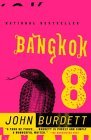
Bangkok 8 by John Burdett

Bangkok 8 has all the usual components of a typical mystery/conspiracy novel – drugs, jewels, prostitution, the FBI, local police detectives, murder mystery, government cover-ups, corruption, and redemption. However, a person can easily read the book without ever realizing this – this is what makes it great.

I am about as ‘suburban white-guy’ as you can get, and I have not had the pleasure to visit Thailand (though as you would except of someone like me, I should point out that I like Thai food). I mention this because (to me) Bangkok 8 was a vision of Thailand – not the Thailand that I as a tourist would ever see or know, but the ‘real’ Thailand. The book is thoroughly modern, yet rooted in traditions of the East that cannot be equaled in the West. Have I gone a bit too far – perhaps, but when you read this book you’ll understand where I’m coming from.

Sonchai Jitpleecheep and his partner are the only honest cops in the whole of Bangkok – which is an interesting development as he is the half-blood son of a whore with a criminal past. His devout Buddhism and honesty set him apart and on a path to tragedy when his partner is killed in the line of duty. Honor-bound to seek vengeance, Sonchai finds himself teamed with a perplexing, beautiful, and very American FBI agent as the investigation turns from ‘who did it’ to ‘what will they do next’.

The murder-mystery-conspiracy plot of Bangkok 8 is good, but nothing new under the sun. The difference, and it’s a wonderful difference, is the point of view from Sonchai – he is all Thai, yet set-apart as a half-blood, and a keen observer as West meets East. I’m in no position to know if Burdett gets Thailand ‘right’ in this book, but it feels like he did.

Sonchai is a sort of metaphysical, karmic guide through the brothels of Bangkok while the wicked and biting exchanges between him and Agent Jones serve as the perfect vehicle for the cultural clash that is Bangkok 8. I now have the urge to visit Thailand to see this clash for myself, ideally as a somewhat removed observer, and to know whether the culture of the East is the future, the past, or something else.

On my 10-point rating scale, Bangkok 8 scores a very appropriate 8. The flavor of this book has all the spice of Thai chili and the moral ambiguity that Western culture cannot live with. I look forward to further adventures of Detective Jitpleecheep in Bangkok Tattoo and forthcoming Bangkok Haunts.

Related Posts: Review of Bangkok Tattoo and Bangkok Haunts (at FantasyBookSpot)

LinkWithin

Related Posts Plugin for WordPress, Blogger...